
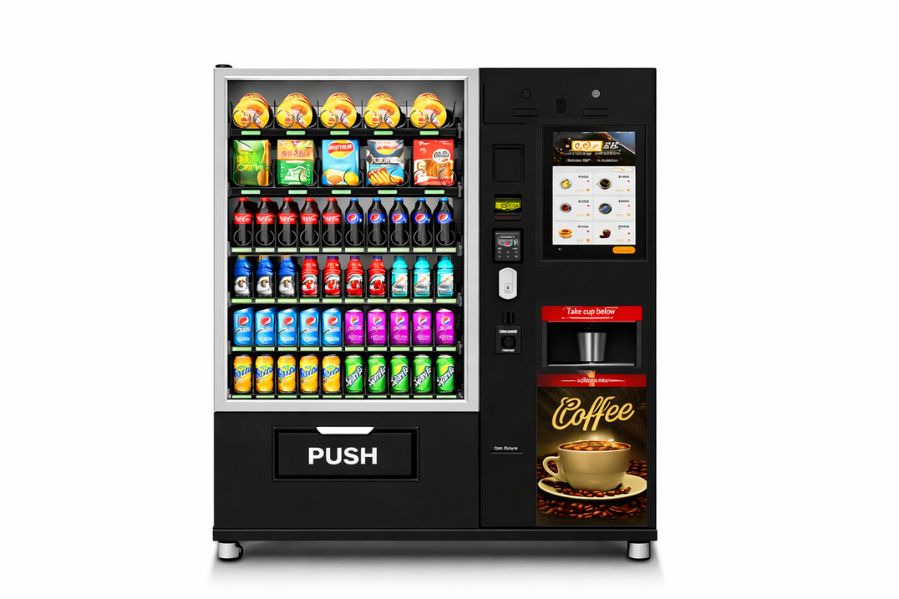

Selecting coffee vending machines primarily involves decisions about capacity, hygiene, and reliability. The right system is one that consistently delivers safe, high-quality beverages during your busiest periods and can be easily maintained within your workplace routines.
Beyond basic functionality, businesses must also consider sustainability, service reliability, and total cost of ownership to ensure the machine delivers consistent long-term value.
How coffee vending machines produce consistent drinks
Modern coffee vending machines use automated brewing systems to control grind size, water temperature, and ingredient dosing. Bean-to-cup machines grind whole beans per drink, producing espresso-style beverages with aroma and crema. Instant or powdered systems deliver faster dispense times and highly consistent output, ideal for high-traffic locations.
Core components include a grinder or ingredient canisters, a hot-water system, a milk-delivery mechanism, and automated cleaning cycles. These systems are designed to maintain stable beverage quality with minimal user input.
Sustainability and energy performance
Sustainability features in coffee vending machines can reduce both environmental impact and operating costs. Many systems include energy-saving standby modes, insulated boilers, and precise dosing to reduce waste.
Businesses assessing Eco-Friendly Coffee Vending Machines should consider measurable factors such as energy consumption, water use, and compatibility with recyclable or compostable cups, where appropriate waste systems are in place.
Matching machine capacity to real demand
The most important decision is matching the machine to your usage profile. Three factors define capacity requirements: daily drinks, peak-hour demand, and refill frequency.
Low-demand workplaces benefit from compact machines with smaller hoppers and simple menus. Medium-demand sites such as offices and gyms require larger ingredient capacity and faster brew cycles. High-demand environments, such as factories or universities, require heavy-duty machines designed for continuous operation and rapid dispensing.
Capacity should always be based on peak demand rather than daily averages to prevent queues and service interruptions.
Food safety and hygiene requirements
Safe operation depends on proper cleaning, sanitising, and water quality. Food Standards Australia New Zealand (FSANZ) distinguishes between cleaning, which removes residues, and sanitising, which reduces microorganisms. Sanitising is only effective after surfaces are properly cleaned, particularly in milk systems and dispensing areas.
Machines connected to a water supply must use potable water suitable for beverage preparation and cleaning. Daily tasks typically include rinsing milk lines, emptying waste containers, and wiping contact surfaces. Weekly maintenance includes deeper cleaning of internal components and checking filters.
Machines that provide guided cleaning prompts and accessible parts make it easier to consistently maintain hygiene standards.
Maintenance and servicing reliability
Most downtime in coffee vending machines is caused by avoidable maintenance issues. Reliable machines are designed with automated rinse cycles, clear error alerts, and easy access to serviceable components.
Preventive servicing should include descaling, seal replacement, and filter changes at scheduled intervals. Access to local technical support and spare parts is essential for high-use environments. Evaluating the supplier’s service capability is as important as evaluating the machine itself.
Beverage quality and menu options
Beverage quality influences how often the machine is used. Bean-to-cup machines generally produce a richer coffee profile suited to client-facing areas. Powder-based machines deliver consistent drinks quickly and are suited to busy sites.
A well-designed menu typically includes espresso, long black, cappuccino, latte, and hot chocolate, with options for dairy alternatives where required. Offering a balanced range improves staff satisfaction and ensures the machine delivers ongoing value.
Placement and workplace safety
Placement affects both usability and safety. Coffee vending machines should be installed in accessible, ventilated locations with sufficient space for users to queue without blocking walkways or emergency exits.
Australian workplace safety guidance requires facilities to be designed to minimise health and safety risks. In practice, this means safe electrical access, stable flooring, and adequate space around the machine for use and cleaning.
Correct placement reduces congestion, slip hazards, and servicing difficulties.
Cost and long-term value
The cost of coffee vending machines should be evaluated as the total cost of ownership rather than the purchase price alone. Key factors include servicing, consumables, cleaning labour, and downtime risk.
Ownership models include purchase, lease, or managed service agreements that include servicing and consumables. Managed services provide predictable costs and reduce internal workload, particularly in high-use environments.
Lower upfront cost does not provide value if maintenance costs or downtime increase over time.
Decision framework
A clear selection process should include:
- Daily and peak demand levels
- Required beverage quality and menu range
- Cleaning and sanitising routines that your team can maintain
- Water supply and filtration requirements
- Service support and preventative maintenance plans
- Safe placement and user flow
- Energy and waste performance
- Total cost of ownership
These factors determine whether a machine will perform reliably in your environment.
Conclusion
The right coffee vending machines align with your peak demand, hygiene practices, and servicing capacity. When capacity, maintenance, and safety are treated as primary criteria, businesses achieve consistent beverage quality, reduced downtime, and a dependable workplace amenity that supports both staff and visitors.