
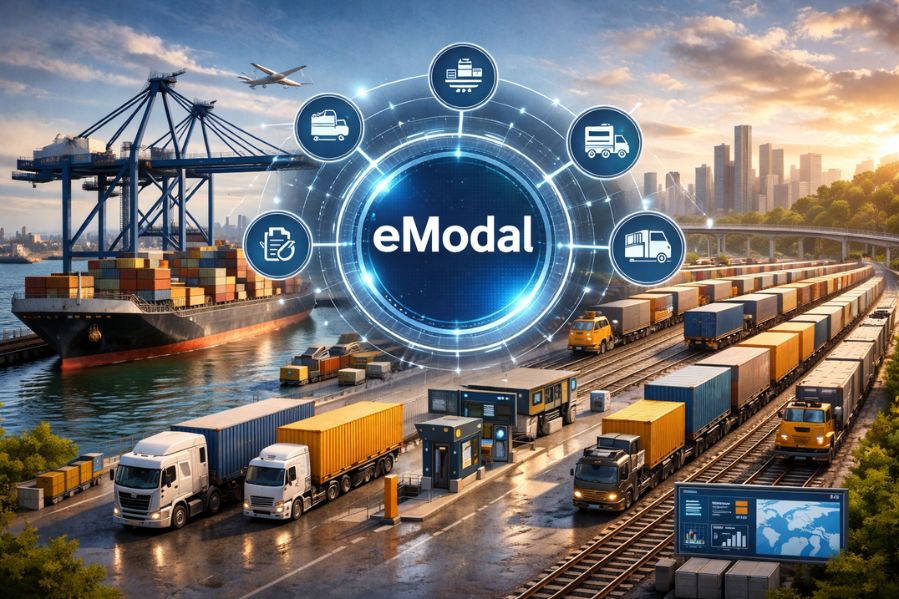

Efficiency is now a fundamental requirement in today’s supply chain environment. Ports, marine terminals, rail facilities, drayage carriers, and cargo owners all depend on timely coordination to keep freight moving without delays or unnecessary costs. As global trade volumes rise and logistics networks become more interconnected, the need for digital platforms that unify fragmented operations has grown significantly. This is where eModal has become highly influential in the intermodal freight industry. Recognised as a leading port community platform, eModal has earned its reputation by enabling stakeholders to communicate more effectively, manage transactions smoothly, and reduce friction that slows cargo movement at critical hubs.
At its core, eModal is designed to solve one of the logistics industry’s biggest challenges: disconnected systems. The movement of freight through marine and rail terminals involves multiple parties, each with its own responsibilities, timelines, and operational systems. Without a centralised digital environment, information gaps can create bottlenecks, missed appointments, gate congestion, detention issues, and a lack of visibility for everyone involved. eModal addresses these concerns by offering a cloud-based Software-as-a-Service platform that creates a shared operational space for logistics participants. Its role in modernising terminal operations and freight coordination has made it an essential tool for companies looking to improve reliability and speed in their supply chain processes.
What Is eModal and Why Does It Matter?
eModal is a port community platform created to connect key participants in intermodal logistics through a single digital framework. Its purpose is to simplify cargo management at marine and rail terminals while making communication among all parties involved faster and more transparent. In practical terms, the platform supports interactions among motor carriers, terminal operators, shippers, consignees, beneficial cargo owners, and other logistics providers that depend on accurate data and coordinated workflows. Instead of relying on disconnected phone calls, manual paperwork, or isolated software tools, users can operate through a centralised system that improves planning and execution.
eModal’s importance stems from the complexity of freight transportation. A container’s journey involves commercial commitments, regulations, schedules, handoffs, and financial factors. Breakdowns at any stage can quickly have a widespread impact, affecting truck turn times, warehouse plans, customer expectations, and costs. As a digital bridge, eModal reduces these risks and supports smoother cargo flow. Operational coordination is especially vital where every delay means lost productivity and higher expenses.
How eModal Supports the Intermodal Freight Ecosystem
The intermodal freight ecosystem includes a wide range of participants whose work must align closely for cargo to move efficiently. Marine terminals must manage vessel operations and container availability; trucking companies need accurate appointment slots and release information; rail terminals require coordinated transfer scheduling; and cargo owners want better visibility into shipment status and timing. eModal supports this ecosystem by creating a shared digital environment where critical operational information can be exchanged and acted upon more efficiently.
This coordination is especially important because intermodal logistics often involves multiple transportation modes and several operational handoffs. A container may arrive by vessel, be processed at a marine terminal, be picked up by truck, be transferred to a rail network, and then be moved toward an inland destination. At each stage, accurate information and timely action are essential. eModal helps users manage these touchpoints more effectively by enabling better access to appointment systems, transaction tools, and terminal-related data. The result is a more synchronised logistics process that reduces confusion and allows stakeholders to make faster, better-informed decisions. In a sector where fragmented communication has long been a challenge, this type of platform is a meaningful step toward greater supply chain integration.
The Value of a Cloud-Based SaaS Model
One of eModal’s defining strengths is its cloud-based SaaS architecture. Unlike older systems that may require complex local installations or infrastructure, cloud delivery allows flexible, efficient platform access. This enables businesses of all sizes to join a digital logistics network, avoiding common technical barriers of legacy systems. With cloud-based solutions, updates and platform enhancements can be quickly rolled out, ensuring the system evolves with industry needs.
The SaaS model also supports scalability, which is critical in the freight sector. Logistics operations can change rapidly due to seasonal volume spikes, market disruptions, policy changes, labour constraints, or evolving customer expectations. eModal benefits from adapting to these shifts while providing consistent performance. This flexibility makes it valuable both for current needs and for long-term digital transformation. As the industry emphasises visibility, efficiency, and data-driven planning, cloud-based infrastructure gives eModal a strong foundation for modern logistics.
How eModal Improves Terminal Efficiency
Terminal efficiency is central to supply chain performance and is a key area where eModal delivers impact. Marine and rail terminals are high-pressure environments demanding careful management of timing, coordination, and resources. Congestion, scheduling conflicts, and incomplete information can create operational slowdowns that affect terminal operators, trucking companies, and cargo owners. eModal addresses these challenges with digital tools that enable better planning, smoother appointments, and more organised interactions among the parties moving freight in and out of terminal facilities.
Efficient terminals aren’t just convenient—they reduce truck turn times, streamline gate operations, and minimise container delays. Improved scheduling and information access reduce uncertainty for drivers and dispatchers, helping providers maximise time and assets. Even small gains in efficiency can create significant supply chain benefits. Platforms like eModal target operational pain points while supporting broader goals like cost control, reliability, and customer satisfaction.
Digital Connectivity and Visibility in Modern Logistics
Modern logistics increasingly depends on digital visibility. Stakeholders want to know where cargo is, what actions are required, when containers are available, and how terminal processes may affect delivery timelines. In traditional operating environments, this information is often spread across separate systems or communicated too slowly to support efficient decision-making. eModal helps improve visibility by centralising operational interactions and making critical logistics data more accessible to the parties who need it.
This enhanced visibility supports stronger decision-making across the freight chain. Trucking companies can better organise dispatching, terminal users can manage appointments with more confidence, and cargo stakeholders can gain a clearer understanding of timing and workflow requirements. In a logistics landscape judged by responsiveness and predictability, timely, shared information is incredibly valuable. eModal creates a connected ecosystem that reduces isolation. As a result, the platform helps minimise inefficiencies and supports a more proactive approach to freight movement and terminal coordination.
The Strategic Significance of the CargoSprint Acquisition
The acquisition of eModal by CargoSprint adds an important strategic dimension to the platform’s future. In the logistics technology sector, such moves often signal a desire to expand capabilities, deepen market reach, and create connected digital ecosystems. For eModal, joining CargoSprint reflects alignment with broader innovation in freight technology and workflow optimisation. This integration can create opportunities for enhanced service offerings, broader product development, and stronger customer support for seamless digital solutions.
From an industry perspective, the acquisition also highlights the continuing importance of logistics digitisation. Companies are increasingly investing in platforms that can reduce manual work, improve coordination, and create better user experiences across the supply chain. By joining forces with CargoSprint, eModal is positioned within a larger conversation about the future of transportation technology. For customers and industry stakeholders, this move may represent not just continuity, but expansion. It reinforces the idea that digital platforms are no longer optional support tools; they are becoming central infrastructure for managing, tracking, and optimising freight in a complex, fast-moving market.
Why eModal Stands Out in a Competitive Market
The logistics technology market includes many software tools, but eModal stands out because of its focused role in the port and terminal community. Rather than trying to be a general-purpose solution for every logistics process, it has carved out value by addressing the unique needs of intermodal operations, especially at the critical points where containers transition between transport modes and operational stakeholders. This specialisation allows the platform to deliver practical value where delays and inefficiencies are often most costly.
Another reason eModal stands out is its relevance to both daily operations and long-term strategy. For operational users, the platform can simplify workflows and improve task execution. For business leaders, it supports broader goals such as digitisation, process standardisation, and better service levels. This dual value makes eModal more than just a transactional system; it becomes part of a company’s larger effort to modernise supply chain execution. In a sector where precision and collaboration matter deeply, platforms that can support both tactical and strategic needs are especially powerful.
The Future of eModal in an Evolving Supply Chain Landscape
The future of supply chain management will be shaped by automation, connectivity, resilience, and smarter data use. As trade patterns shift and pressure grows on logistics providers to do more, faster, and with greater accuracy, platforms like eModal are likely to become even more important. The need for integrated digital systems at ports and rail terminals will continue to rise as stakeholders seek better ways to manage volume, reduce friction, and respond to disruptions. In that environment, eModal is well-positioned to remain a meaningful part of the industry’s transformation.
Its continued relevance will likely depend on how well it evolves with customer needs and industry expectations. That includes expanding digital capabilities, strengthening system interoperability, and supporting more seamless freight coordination across the transportation chain. Because eModal already operates in a highly important segment of logistics, its future development could significantly influence how port and intermodal communities operate in the years ahead. As supply chains continue to prioritise speed, transparency, and operational resilience, platforms built on connection and coordination will only become more essential.
Conclusion
eModal has established itself as a major force in the intermodal freight industry by helping connect the many stakeholders involved in port and terminal operations. Through its cloud-based SaaS platform, it brings greater efficiency, visibility, and coordination to a part of logistics that has historically struggled with fragmentation and delay. Its ability to support marine and rail terminal workflows while improving communication across the freight ecosystem makes it a highly valuable solution for modern supply chain operations.
With its acquisition by CargoSprint, eModal also enters a new chapter that could strengthen its role in the broader logistics technology landscape. As digital transformation continues to reshape transportation and terminal operations, eModal remains a strong example of how focused, connected platforms can solve real-world operational challenges. For businesses seeking smoother cargo movement, better terminal coordination, and more reliable intermodal processes, eModal represents both present-day value and future potential.