
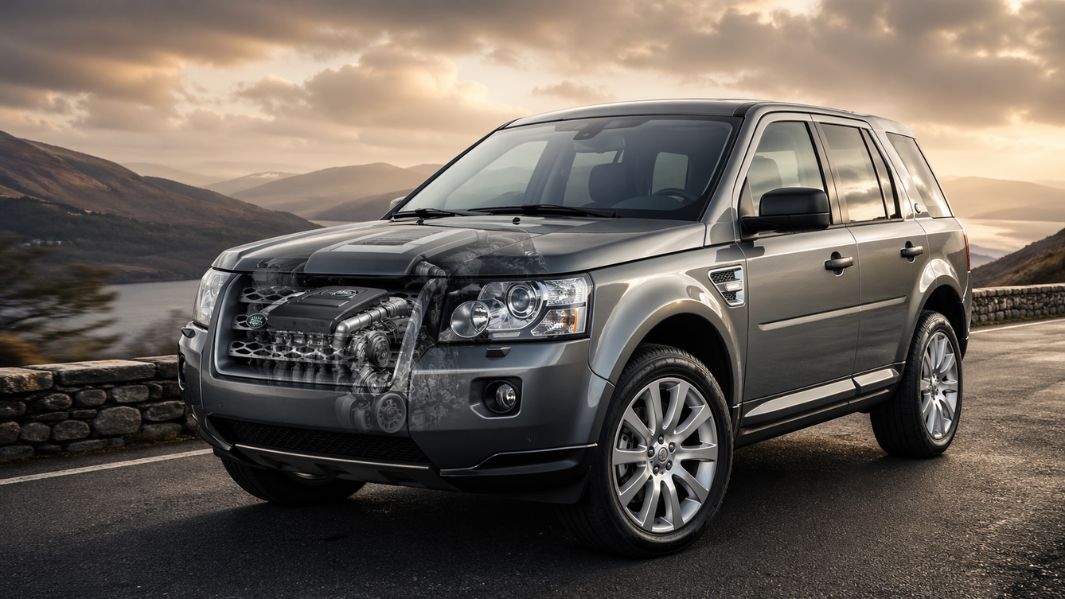

The Land Rover Freelander 2 is one of the most common used SUVs in the UK market. Engine longevity is the number one concern for buyers and existing owners alike. The answer is not a single number; it depends on the engine, the service history, and how the vehicle is driven.
This guide covers the specific engines fitted to the Freelander 2, their realistic lifespan, common failure points, and what you need to do to get the most miles from them.
Freelander 2 Engines and Their Expected Lifespan
| Engine | Type | Expected Lifespan | Known Weakness |
|---|---|---|---|
| 2.2 TD4 (224DT) | Diesel | 150,000 to 200,000 miles | EGR valve, DPF |
| 2.0 Si4 (204PT) | Petrol | 120,000 to 180,000 miles | Timing chain, oil leaks |
| 3.2 i6 (32D) | Petrol | 130,000 to 170,000 miles | High fuel consumption, chain |
The 2.2 TD4 diesel is the most common engine in the Freelander 2 and is also the more durable of the two main options. With proper maintenance, it reaches 150,000 to 200,000 miles without needing a rebuild. The petrol 2.0 Si4 is capable but has a shorter realistic lifespan under UK driving conditions.
What Affects Freelander 2 Engine Lifespan
Three factors determine how long your Freelander engine lasts more than anything else.
Service intervals
The 2.2 TD4 requires an oil change every 12 months or 12,500 miles, whichever comes first. Stretching this interval degrades the oil and accelerates bearing wear. Engines that have been serviced on time consistently reach 180,000 miles without major internal work. Engines with gaps in service history rarely make it past 120,000 miles without issues.
Oil quality and grade
Land Rover specifies 0W-30 fully synthetic oil for most Freelander 2 engines. Using the wrong grade or mixing synthetic with mineral oil reduces protection at operating temperature. This is a common and avoidable cause of premature engine wear.
Driving style and load
Short trips where the engine never reaches full operating temperature cause accelerated wear, particularly on diesel units. The DPF on the 2.2 TD4 also needs periodic high-speed runs to complete passive regeneration. Engines used predominantly on short urban journeys wear faster and develop DPF problems earlier.
Common Freelander 2 Engine Problems
Knowing the specific failure points helps you catch problems before they become expensive.
EGR valve failure (2.2 TD4)
The EGR valve on the 2.2 TD4 is a known weak point. A faulty EGR valve allows exhaust gases to recirculate incorrectly, leading to carbon buildup in the intake manifold. Symptoms include rough idle, poor throttle response, and increased smoke. A blocked EGR can also cause coolant contamination if the EGR cooler fails alongside it.
Cost to fix: £200 to £600 for EGR valve replacement. EGR cooler replacement runs £400 to £900.
DPF blockage (2.2 TD4)
The diesel particulate filter blocks when the engine is used mainly on short journeys. Once the DPF warning light appears, a forced regeneration or professional clean is needed. Ignoring it leads to back-pressure build-up that damages the turbo and, in severe cases, causes oil ingestion.
Cost to fix: £150 to £300 for a professional DPF clean. Replacement DPF costs £800 to £1,500 fitted.
Timing chain wear (2.0 Si4 petrol)
The Si4 petrol engine uses a timing chain rather than a belt. Chains are designed to last the life of the engine, but on the Si4, chain stretch at high mileage is a documented issue. A rattling noise on cold start is the key symptom. Ignoring it risks chain failure and bent valves.
Cost to fix: £600 to £1,200 for timing chain replacement at a specialist.
Oil leaks from rocker cover and sump
Both the diesel and petrol Freelander 2 engines develop oil leaks from the rocker cover gasket and sump seal at higher mileages. These are not catastrophic but they reduce oil level silently. Check for oil residue on the underside of the engine at each service.
Turbocharger failure (2.2 TD4)
Turbo failure on the 2.2 TD4 is usually caused by oil starvation or oil contamination. A failing turbo produces excessive smoke, loss of power, and a whining noise under boost. If metal debris from the turbo enters the engine, it causes rapid bearing damage.
Cost to fix: £700 to £1,400 for turbo replacement fitted.
Freelander 2 Engine at High Mileage: What to Expect
| Mileage | Typical Condition | Common Requirements |
|---|---|---|
| Under 80,000 | Good if serviced | Routine service items only |
| 80,000 to 130,000 | Variable, service history critical | EGR, DPF checks, timing chain inspection |
| 130,000 to 180,000 | Wear evident on poorly maintained engines | Possible turbo, seals, EGR work |
| 180,000 plus | Major work likely needed | Rebuild or replacement assessment needed |
How to Extend Your Freelander 2 Engine Life
- Change the oil and filter every 12 months or 12,500 miles using the correct specification
- Use only Land Rover approved or equivalent fully synthetic oil
- Take a 20 to 30 minute motorway run every two weeks if you mainly do short trips
- Check coolant level monthly and look for signs of contamination
- Address the EGR valve before it causes intake manifold carbon buildup
- Replace the air filter at every service; a restricted filter increases engine load
- Check for oil leaks at each service and repair them before oil level drops critically
Is a High-Mileage Freelander 2 Worth Buying?
A 2.2 TD4 Freelander 2 with a full service history at 130,000 miles is a reasonable purchase. The same engine at 130,000 miles with a patchy service record is a risk.
Before buying any high-mileage Freelander 2, check these:
- Full service history with correct oil specification recorded
- EGR valve condition and any recent coolant work
- DPF status, particularly if the vehicle was used for urban driving
- No smoke on cold start or under load
- Oil not milky or foamy on the dipstick
- Timing chain rattle on cold start, particularly on the Si4 petrol
When the Engine Needs Replacing
At around 180,000 to 200,000 miles on a well-maintained 2.2 TD4, internal wear reaches a point where repair costs outpace the car’s value. Common indicators that replacement is the better option:
- Compression below 120 psi on multiple cylinders
- Persistent blue smoke despite ring and seal repairs
- Metal particles confirmed in oil analysis
- Crankshaft journals worn beyond regrind tolerance
A reconditioned 2.2 TD4 unit costs £1,500 to £2,500 in the UK. Fitted by a specialist, total cost is £2,200 to £3,500. For a Freelander 2 worth £4,000 to £7,000, this remains a financially viable repair.
FAQs
Q: How many miles should a Land Rover Freelander 2 engine last?
A well-maintained 2.2 TD4 diesel lasts 150,000 to 200,000 miles. The 2.0 Si4 petrol typically reaches 120,000 to 180,000 miles before major work is needed. Service history is the biggest variable.
Q: What is the most reliable Freelander 2 engine?
The 2.2 TD4 diesel (224DT engine code) is the most durable option. It has a robust block and, when the EGR and DPF are maintained properly, runs well past 150,000 miles.
Q: Is the Freelander 2 expensive to maintain?
Routine maintenance costs are moderate. The main expense risk is EGR and DPF work on diesel models and timing chain replacement on the Si4 petrol. Staying on top of service intervals keeps major repair bills at bay.
Q: What does a Freelander 2 engine replacement cost in the UK?
A reconditioned 2.2 TD4 unit fitted by a specialist costs between £2,200 and £3,500 all-in. A used engine fitted costs £1,500 to £2,500.
Q: Does the Freelander 2 have a timing belt or chain?
The 2.2 TD4 diesel uses a timing belt, which Land Rover recommends replacing every 5 years or 72,000 miles. The 2.0 Si4 petrol uses a timing chain, which should last the engine’s life but needs inspection at high mileage if rattle is present.
Q: What causes Freelander 2 engine failure most often?
EGR cooler failure leading to coolant contamination is the most common cause of serious engine damage on the 2.2 TD4. On petrol models, timing chain failure and oil starvation are the primary causes.
Q: How do I know if my Freelander 2 engine is failing?
Watch for white or blue smoke, milky oil on the dipstick, a persistent oil pressure warning, engine knock at idle, or sudden power loss. A compression test confirms internal condition.
Q: Can a Freelander 2 engine be rebuilt rather than replaced?
Yes. If the block is sound, a rebuild is viable. However, the availability of quality reconditioned 2.2 TD4 units in the UK means replacement is often faster and similarly priced to a full rebuild.
Q: Is the Freelander 2 a good long-term car?
With a verified service history and no EGR or DPF issues, the Freelander 2 is a solid long-term vehicle. Avoid examples with unknown histories or signs of coolant contamination.
Q: What oil does the Freelander 2 need?
Land Rover specifies 0W-30 fully synthetic oil meeting the ACEA C3 standard for the 2.2 TD4. Using the correct oil grade is one of the single biggest factors in engine longevity.