
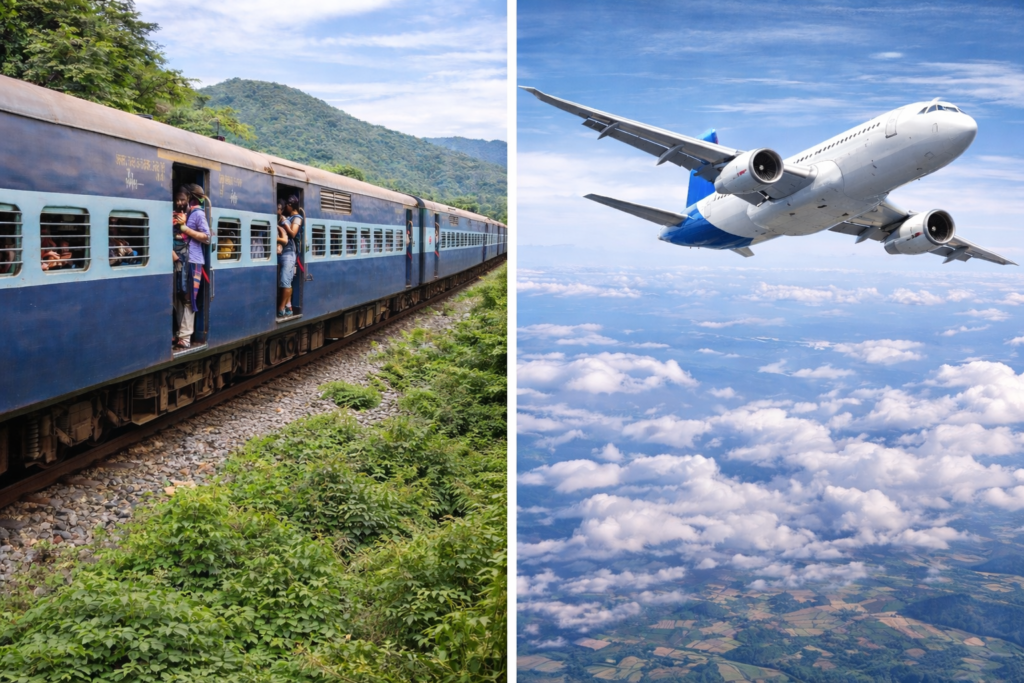

Once you have sorted your route, the next question is how to move around once you are there. For first-time visitors, this can feel like one of the trickiest parts of planning India. Distances are not always obvious on a map, road journeys can take longer than expected, and the best option often depends on whether you care most about speed, comfort or cost. If you are already looking at tickets to India, it makes sense to think about internal transport at the same time, because it can shape how realistic your trip actually is.
A common mistake is to assume every journey should be done the same way. In reality, India works best when you mix transport types depending on the route. A train might be ideal between Delhi and Agra, while a private car makes more sense for Kochi to Munnar. Domestic flights can save a lot of time on long distances, but they are not always worth the airport hassle for shorter trips. Before you book tickets to India, it helps to think beyond the international flight and consider how you will actually get from place to place once you land.
For most tourists, the aim is not to try every transport option for the experience of it. The aim is to choose the option that keeps the trip manageable. India is large, busy and rewarding, but it can also be tiring if you build an itinerary around long, awkward transfers. The right choice is usually the one that fits your time, energy and budget rather than the one that looks cheapest at first glance.
Trains: good for classic routes, but plan ahead
Trains are one of the most practical ways to travel in India, especially on popular tourist routes. They can be efficient, reasonably comfortable and often better value than flying. For travellers, the main appeal is that trains link major cities without the stress of driving or the airport process.
A good example is Delhi to Agra. This is one of the clearest cases where rail makes sense. The journey is manageable, the route is well used, and you can avoid the slower feel of a road transfer if you choose the right service. Trains can also work well between Delhi and Jaipur, or on other major intercity routes where the rail network is established and frequent.
That said, trains need planning. Popular services and better classes often book up well in advance, especially during busy travel periods. Leaving it too late can mean less convenient times, lower comfort or no availability at all. First-time visitors also need to be realistic about station time, finding the right platform and allowing for possible delays. It is very doable, but it works best when you prepare rather than improvise.
For tourists, trains are usually best when the route is direct, the journey is not overly long, and you want a balance of comfort and value.
Private transfers and taxis: easiest for shorter or awkward routes
Private transfers are often the simplest option when trains do not fit the journey well. They give you door-to-door convenience, which matters more in India than some travellers expect. You avoid navigating stations, negotiating last-minute transport and figuring out local connections with luggage after a long journey.
Kochi to Munnar is a good example. Flying is not relevant here, and the appeal of the journey is more about getting from the city to the hills comfortably. A private car is usually the easiest choice because it is direct and practical, especially if you are travelling as a couple, carrying bags, or simply want a smoother experience. The roads are winding and the trip can take several hours, so comfort matters.
The same logic applies to many shorter routes where rail is not convenient or where the final destination is outside a major station or airport. A private transfer can also work well if you are arriving after a long international flight and want the least complicated first leg of the trip.
Local taxis are useful too, but they are usually better for city travel or shorter hops rather than major intercity routes unless arranged properly. For longer journeys, booking a private transfer in advance is generally more dependable than trying to sort it on the day.
Domestic flights: best for saving time over long distances
Domestic flights make the biggest difference when you are covering long distances between regions. If your trip includes both North India and the south, flying often makes sense. For example, going from Jaipur to Kochi overland would take up far too much time for most holidays. A flight keeps the trip realistic.
Flying is also useful when you have limited time and do not want to lose a full day or more to travel. For a two-week holiday, that can be important. India is large enough that a long overland journey can eat into the trip quickly.
The limits are straightforward. Flights still come with airport transfers, check-in, security and waiting time, so they are not always the fastest option once you factor everything in. On shorter routes, that extra admin can make rail or road feel easier overall. Flights can also be more expensive, especially if booked late or during peak periods.
As a rule, domestic flights are most useful when travelling between regions, when the overland alternative is long and tiring, or when time matters more than cost.
When overland travel is the better choice
Overland travel often works better when the journey itself is manageable and the destination is close enough to reach without losing the day. Delhi to Agra is a clear case where train or road usually beats flying. The distance does not justify an airport process. In Kerala, road travel often makes more sense because many popular places are not connected in a way that makes flights useful.
There is also a practical point here: overland transport can make a trip feel more coherent. You see the landscape change, you arrive more directly, and you avoid some of the stop-start feeling that comes with repeated flights. For a first trip, fewer airports can sometimes mean a calmer experience.
Booking in advance matters
One of the biggest planning mistakes in India is assuming everything can be sorted casually at the last minute. Sometimes it can, but not always in the way you want. Trains, flights and good private transfers are usually better booked ahead, especially if you are travelling in busy months or on well-known routes.
Advance booking is not just about price. It is also about timing. A cheap option is not much use if it leaves at an awkward hour, arrives too late, or cuts into valuable sightseeing time. Always think in terms of the whole day, not just the transport itself.
Safety, apps and common mistakes
For most tourists, the basics make a big difference. Use reputable booking platforms, keep hotel details handy, and double-check station or airport names before setting off. Ride-hailing apps can be helpful in cities, especially for straightforward taxi journeys, but availability varies by location.
A common mistake is underestimating how tiring transfer days can be. Another is planning back-to-back long journeys without any breathing room. It is also wise not to assume the cheapest option is automatically the best value once comfort and time are taken into account.
For private cars and taxis, agree the arrangement clearly if it is not prepaid. For trains and flights, keep digital and printed details easy to access, and allow more time than you think you need.
Choose transport to match the trip
There is no single best way to get around India. The best option depends on the route. Trains are often excellent for classic city-to-city journeys. Private transfers are often easiest for hill areas, rural stays and routes that do not connect neatly by rail. Domestic flights are most useful for long distances where time matters.
The practical approach is to choose transport based on three things: how much time you have, how comfortable you want the journey to be, and how much you want to spend. If a train saves money without making the day harder, it is often a good choice. If a private car removes stress on a complicated route, it may be worth paying more. If a flight saves a full day, it can be the right trade-off. In India, the smoothest trips are usually the ones that stay flexible and use the right transport for each leg rather than forcing one option to do everything.