
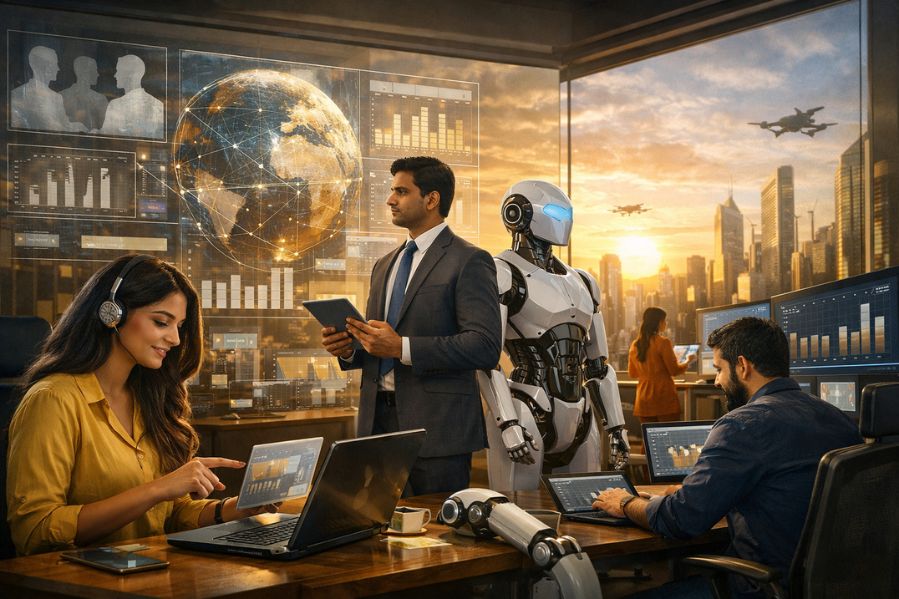

The modern workplace is undergoing a profound transformation driven by digital technologies, remote work models, and the increasing need for operational efficiency. Organizations are no longer relying on fragmented systems to manage human resources, payroll, and workforce operations. Instead, they are moving toward integrated ecosystems that unify these functions into a single, streamlined framework.
At the center of this transformation lies automation and intelligent systems that reduce manual effort, improve accuracy, and enable real-time decision-making. Among these tools, payroll software plays a critical role in ensuring that employee compensation is handled efficiently, compliantly, and transparently. When integrated with broader HR systems and workforce automation tools, it becomes part of a cohesive infrastructure that supports the entire employee lifecycle.
The Evolution of Workplace Systems
Historically, payroll and HR functions operated in silos. HR teams managed recruitment, onboarding, and employee records, while payroll teams handled salary calculations, tax deductions, and compliance separately. This separation often led to inefficiencies, data inconsistencies, and increased administrative overhead.
With the rise of digital transformation, businesses began adopting software solutions to digitize these processes. Early systems focused on automating individual tasks, such as payroll calculations or attendance tracking. However, these tools were often disconnected, requiring manual data transfer between platforms.
Today, organizations are shifting toward integrated solutions that combine HR, payroll, and workforce management into unified platforms. This evolution reflects a broader trend toward automation and data centralization, enabling organizations to operate more efficiently and make better-informed decisions.
The Role of Integration in Modern Workflows
Integration is the key enabler of efficiency in modern workforce management. By connecting HR systems, payroll systems, and automation tools, organizations can eliminate redundant processes and reduce the risk of errors.
For example, when employee data is updated in an HR system, such as a change in salary, role, or benefits, it can automatically sync with payroll systems without manual intervention. This ensures that compensation is always accurate and up to date.
Integrated systems also improve compliance by maintaining consistent records across platforms. Tax calculations, regulatory reporting, and audit trails become easier to manage when data flows seamlessly between systems.
A well-implemented payroll software solution acts as a central component in this ecosystem, ensuring that financial processes align with HR data and workforce activities.
Workforce Automation and Its Impact
Workforce automation refers to the use of technology to streamline and automate repetitive tasks related to employee management. This includes scheduling, attendance tracking, performance monitoring, and task assignment.
Automation reduces the need for manual input and allows organizations to allocate resources more effectively. For example, automated time-tracking systems can capture employee work hours and feed that data directly into payroll calculations, eliminating the need for manual timesheets.
In addition to operational efficiency, automation enhances accuracy and consistency. Human errors, such as incorrect data entry or miscalculations, are minimized when processes are automated. This leads to more reliable outcomes and improved employee trust.
Enhancing Accuracy and Compliance
One of the most critical functions of payroll systems is ensuring compliance with labor laws, tax regulations, and reporting requirements. These regulations vary by region and are subject to frequent updates, making manual management challenging.
Modern payroll software solutions are designed to automatically update tax rules, apply correct deductions, and generate compliant reports. This reduces the risk of penalties and ensures that organizations remain aligned with legal requirements.
When integrated with HR systems, compliance becomes even more streamlined. Employee data such as contracts, work hours, and benefits can be automatically factored into payroll calculations, ensuring that all variables are accounted for accurately.
This integration is particularly important for organizations operating across multiple jurisdictions, where regulatory complexity increases significantly.
Supporting Remote and Hybrid Work Models
The shift toward remote and hybrid work has introduced new challenges in workforce management. Employees may be distributed across different locations, time zones, and even countries, requiring flexible and scalable systems to manage them effectively.
Integrated HR and payroll systems provide the infrastructure needed to support distributed teams. Cloud-based platforms allow employees and managers to access information from anywhere, ensuring continuity of operations regardless of location.
For payroll, this means handling multiple currencies, tax regimes, and employment classifications. A robust payroll software solution can accommodate these variations while maintaining consistency in processing and reporting.
Automation also plays a role in managing remote teams by tracking work hours, monitoring productivity metrics, and ensuring that compensation aligns with actual performance data.
Data Centralization and Decision-Making
One of the most significant advantages of integrating HR, payroll, and workforce systems is centralized data management. When all employee-related information is stored in a unified system, organizations gain a comprehensive view of their workforce.
This centralized data enables better decision-making across multiple areas:
- Workforce planning and resource allocation
- Compensation benchmarking and adjustments
- Performance evaluation and talent management
- Budget forecasting and financial planning
By leveraging analytics tools, organizations can extract insights from payroll and HR data to identify trends, optimize processes, and improve strategic outcomes.
A modern payroll software platform often includes reporting and analytics features that provide visibility into payroll expenses, tax liabilities, and workforce costs. These insights are valuable for finance and HR teams alike.
Improving Employee Experience
Employee experience is a critical factor in attracting and retaining talent. Integrated systems contribute to a smoother and more transparent experience for employees throughout their lifecycle.
For instance, self-service portals allow employees to access their pay slips, update personal information, and track their benefits without needing to contact HR. This autonomy improves satisfaction and reduces administrative workload for HR teams.
Timely and accurate payroll processing is also essential for maintaining trust. Delays or errors in salary payments can negatively impact morale and employee engagement. Automation helps ensure that payroll is processed consistently and on schedule.
In addition, integrated systems can support personalized experiences by offering tailored benefits, performance feedback, and career development opportunities based on employee data.
Scalability for Growing Organizations
As organizations grow, managing HR and payroll processes manually becomes increasingly difficult. Scaling operations requires systems that can handle larger volumes of data, more employees, and complex workflows.
Integrated platforms provide the scalability needed to support growth. Whether an organization is expanding into new markets, hiring remote employees, or increasing its workforce size, a unified system can adapt without requiring significant restructuring.
Cloud-based solutions are particularly effective in this regard, as they offer flexibility, remote accessibility, and automatic updates. Businesses can scale their operations without worrying about infrastructure limitations or system fragmentation.
Security and Data Protection
Handling employee data requires a high level of security and privacy. Payroll and HR systems contain sensitive information, including personal details, financial records, and employment contracts.
Integrated systems are designed with security in mind, incorporating features such as encryption, access controls, and multi-factor authentication. These measures help protect data from unauthorized access and cyber threats.
Compliance with data protection regulations is also a key consideration. Organizations must ensure that their systems adhere to standards such as GDPR or other regional privacy laws.
A secure payroll software solution ensures that financial data is processed safely while maintaining confidentiality and integrity across the organization.
Challenges in Integration
Despite its benefits, integrating HR, payroll, and workforce automation systems is not without challenges.
System Compatibility
Legacy systems may not easily integrate with modern platforms, requiring customization or migration efforts.
Implementation Complexity
Deploying integrated solutions can involve significant planning, configuration, and training.
Data Migration
Transferring existing data from multiple sources into a unified system must be done carefully to avoid inconsistencies or loss of information.
Change Management
Employees and teams may need time to adapt to new systems and workflows. Proper training and communication are essential for successful adoption.
Organizations that invest in proper implementation strategies and vendor support are more likely to overcome these challenges effectively.
The Role of Artificial Intelligence and Automation
Artificial intelligence is playing an increasingly important role in workforce management systems. AI-powered tools can analyze large datasets, predict trends, and automate complex decision-making processes.
In payroll and HR systems, AI can help with:
- Detecting anomalies in payroll calculations
- Predicting workforce costs and budget requirements
- Automating routine administrative tasks
- Enhancing recruitment and talent matching processes
When combined with automation, AI enables systems to become more intelligent and adaptive over time. A modern payroll software solution may incorporate AI-driven features to improve accuracy, efficiency, and forecasting capabilities.
Future Trends in Workforce Management
Looking ahead, several trends are expected to shape the future of work and integrated systems:
- Increased adoption of cloud-based platforms
- Greater emphasis on employee self-service tools
- Expansion of global workforce management capabilities
- Deeper integration between HR, payroll, and financial systems
- Continued growth of AI-driven automation and analytics
These trends point toward a more connected, data-driven, and automated workplace where systems work together seamlessly to support both organizational goals and employee needs.
Conclusion
The integration of payroll, HR, and workforce automation systems represents a fundamental shift in how organizations manage their operations. By unifying these functions into a cohesive ecosystem, businesses can improve efficiency, reduce errors, enhance compliance, and deliver a better employee experience.
A well-implemented payroll software solution serves as a critical component within this ecosystem, ensuring that financial processes are accurate, secure, and aligned with broader HR data. When combined with automation and advanced analytics, it enables organizations to operate more strategically and adapt to the demands of a rapidly changing work environment.
As the future of work continues to evolve, organizations that embrace integrated, automated systems will be better positioned to scale, compete, and thrive in an increasingly complex global landscape.