
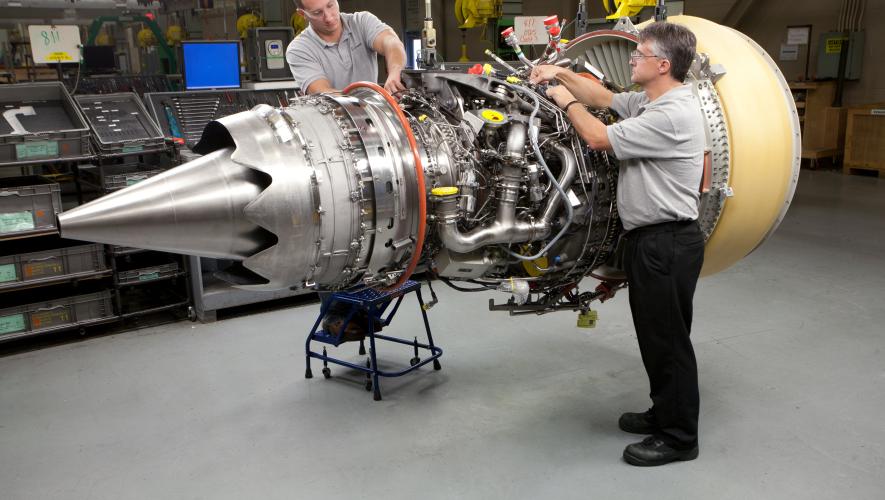

Modern aircraft maintenance has transformed dramatically over the past decade, moving far beyond the manual inspection checklists and paper-based tracking systems of the past. Airlines and maintenance providers now rely on sophisticated digital tools, artificial intelligence, and advanced sensors to keep planes operating safely and efficiently. These innovations have not only improved aircraft reliability but also reduced downtime and maintenance costs across the industry. Understanding these technological shifts reveals how aviation has become significantly safer and more operationally efficient.
1. Predictive Maintenance Systems
Predictive maintenance represents one of the most significant shifts in how airlines approach plane upkeep. Rather than waiting for components to fail or following rigid scheduled maintenance intervals, airlines now use data analytics to predict when parts will need replacement or repair. Aircraft equipped with sensors continuously transmit performance data to ground systems, where algorithms analyze patterns and flag potential issues before they become critical problems. For example, a sensor monitoring engine vibration patterns can alert technicians to bearing degradation weeks before actual failure would occur, allowing planned maintenance instead of emergency repairs.
This approach saves airlines substantial money and improves safety simultaneously. Unexpected maintenance events, often called unscheduled maintenance, are costly because they disrupt flight schedules and require expensive emergency repairs at inconvenient times. Predictive systems reduce these unplanned events by identifying problems during routine operations, when maintenance can be scheduled between flights. The technology also extends component lifespan by preventing catastrophic failures that damage multiple systems, ultimately reducing the total cost of aircraft ownership over its operational life.
2. Advanced Diagnostics and Monitoring Equipment
Modern diagnostic equipment has revolutionized how technicians identify and assess aircraft problems with precision and speed. Handheld ultrasonic devices, thermal imaging cameras, and advanced borescopes allow mechanics to inspect inaccessible areas without disassembling major components. These tools provide real-time visual and thermal data that helps technicians make accurate assessments of equipment condition in minutes rather than hours. Digital recording capabilities mean inspections can be documented, reviewed by specialists remotely, and compared against baseline data to track degradation over time.
Aircraft nowadays are equipped with onboard health monitoring systems that continuously record thousands of data points during every flight. This information includes engine performance, fuel consumption, electrical system status, structural stress, and hydraulic pressure readings. When an aircraft lands, all this data is automatically transmitted to maintenance facilities where specialists review it for anomalies. The ability to correlate multiple data streams allows technicians to identify subtle patterns that might indicate emerging problems, making maintenance decisions more informed and timely.
3. Digitized Maintenance Records and Documentation
Paper maintenance logs have largely disappeared, replaced by comprehensive digital systems that track every service, inspection, and repair on an aircraft. These cloud-based platforms store complete maintenance histories, allowing instant access to information about what work has been performed, when it was done, and which parts were installed. Technicians can quickly identify how many flight hours a component has accumulated or determine if a particular system has a history of recurring issues. Digital records also ensure regulatory compliance by automatically flagging when scheduled maintenance intervals are approaching, reducing the risk of missed services. Ground crews securing aircraft during scheduled maintenance stops rely on a new aircaft wheel chock to ensure the aircraft remains stationary while technicians carry out inspections and service work safely.
The transition to digital documentation has improved communication across maintenance teams and different facilities. When an aircraft travels between maintenance bases or is serviced by multiple providers, all parties access the same current information, eliminating confusion and preventing duplicate work. Electronic work order systems streamline the assignment of maintenance tasks and ensure proper tracking of completion. Additionally, digital systems facilitate better training by allowing technicians to review complete maintenance histories and learn from previous repairs and solutions.
4. Artificial Intelligence and Machine Learning Applications
Artificial intelligence is increasingly being deployed to analyze vast amounts of maintenance data and identify patterns that human technicians might miss. Machine learning algorithms can be trained on years of maintenance records to recognize the signatures of developing problems in sensor data and performance metrics. These systems improve over time as they process more data, becoming increasingly accurate at predicting component failures and optimal maintenance timing. Airlines can input specific operational profiles and environmental conditions to receive personalized maintenance recommendations rather than relying on generic manufacturer guidelines.
Chatbots and AI-powered support systems now assist maintenance planners by answering technical questions and retrieving relevant documentation instantly. Some airlines use AI to optimize maintenance scheduling, finding the most efficient times to perform required work while minimizing impact on flight operations. The technology can analyze multiple constraints simultaneously, including aircraft availability, technician schedules, parts inventory, and regulatory requirements, to generate optimal maintenance plans. As these systems become more sophisticated, they promise to make aircraft maintenance increasingly efficient and proactive rather than reactive.
5. Automation and Robotics in Maintenance Work
Robotic systems are being introduced into aircraft maintenance to handle tasks that are repetitive, dangerous, or physically demanding for human technicians. Automated inspection drones equipped with cameras and sensors can navigate tight spaces within engines and fuselages, documenting conditions with precision and consistency. Robotic arms assist with heavy lifting and component installation, reducing strain on workers and improving accuracy. Some facilities now employ robots to perform surface cleaning and preparation work, which is necessary before painting or coating applications.
Automated systems enhance safety by removing technicians from hazardous environments and reducing exposure to harmful chemicals and high temperatures. The consistency of robotic work also improves quality, as machines repeat procedures identically across multiple aircraft. However, these systems complement rather than replace human expertise, since technicians still interpret data, make complex decisions, perform repairs requiring judgment and adaptation, and oversee robotic operations to ensure safety and accuracy. The integration of automation into maintenance operations represents an evolution that enhances human capability rather than eliminating the human element entirely.
Conclusion
The technological advances transforming aircraft maintenance have fundamentally changed how airlines keep their fleets safe, reliable, and operationally efficient. Predictive analytics, advanced diagnostics, digital documentation, artificial intelligence, and robotics work together to create a maintenance environment that is more proactive, data-driven, and precise than ever before. These innovations reduce unexpected failures, lower maintenance costs, and free skilled technicians to focus on complex problem-solving rather than routine manual tasks. As technology continues to evolve, aircraft maintenance will become even smarter and more responsive to the actual condition of aircraft rather than predetermined schedules. The result is a safer, more sustainable aviation system that benefits airlines, passengers, and the broader aerospace industry.