
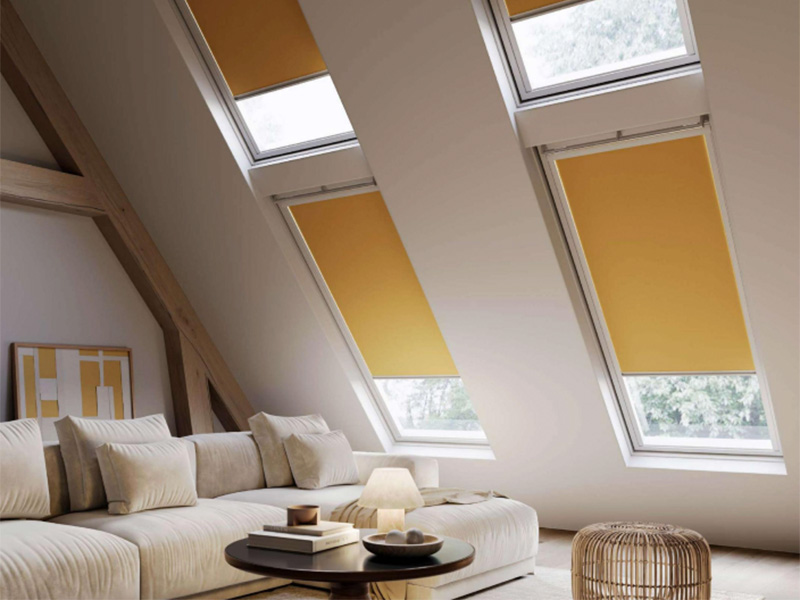

Skylights and roof windows flood a room with beautiful overhead light — and, left bare, with glare, heat and early-morning brightness you cannot escape. Because they sit out of easy reach and at an angle, they need a covering built specifically for the job.
Why standard blinds won’t do
A normal blind hangs by gravity; on a sloped or overhead window it simply sags away from the glass. Purpose-made skylight blinds run in side channels that hold the fabric tight against the pane at any angle, so they stay put whether the window is vertical, raked or flat overhead.
Heat is the real problem
Roof glass gains and loses heat faster than any wall window, baking a loft in summer and leaking warmth in winter. A layer of thermal blinds with a reflective or cellular backing makes a dramatic difference, keeping a converted attic usable through the seasons and taking pressure off your heating and cooling.
Conservatories and glazed roofs
The same logic applies across a glazed roof or a conservatory. Coordinated conservatory window blinds tame the greenhouse effect that makes these spaces unbearable in July and freezing in January, turning an occasional room into one you actually use all year.
Reach and operation
For a high skylight, choose a blind you can work without a ladder — a long wand, a pole-operated mechanism, or a motorised version you control from the wall. Motorised options really come into their own here, and can be set to close automatically against the midday sun.
Light, sleep and glare
Overhead light is wonderful in a living space but disastrous in a loft bedroom, where a roof window can throw daylight straight onto the pillow at sunrise. A blackout-lined skylight blind solves this, holding the room dark for sleep despite the exposed glass overhead — essential in a converted attic bedroom that faces east.
The same glare that lights a bedroom too early also bounces off screens in a home office or media room under the eaves. A blind that filters or blocks the overhead sun makes these rooms genuinely workable, letting you control a bright midday without turning the loft into a cave. Matching the fabric to the room’s use — filtering for a study, blackout for a bedroom — is the key decision.
Overhead glazing is a joy when it is controlled and a liability when it is not. Pick a blind made for the angle, prioritise thermal performance, and sort out how you will reach it — and your skylight becomes pure benefit.
Fit and finish
Roof windows come in standard sizes from the major manufacturers, so it is worth checking whether your skylight matches a common model before ordering, as this makes finding a precise fit far easier. A blind that runs in side channels and sits flush to the glass not only stays put at any angle but also seals better against heat and light. For a hard-to-reach unit, decide early how you will operate it — a telescopic pole or a motor — because retro-fitting that later is more hassle than choosing it from the start.