
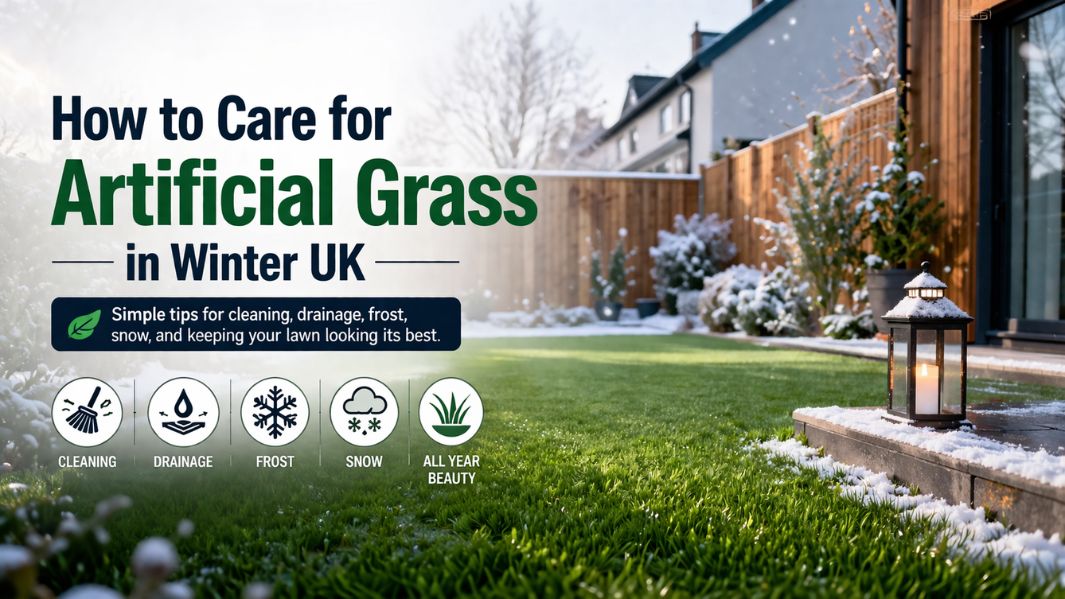

When winter arrives in the UK, gardens tend to change quickly. Lawns become soggy, muddy patches start to appear, and frost can leave natural grass looking tired for weeks. That is one of the reasons so many homeowners choose artificial grass in the first place. It stays neat, green, and usable even when the weather turns cold and wet.
That said, artificial grass still benefits from a little seasonal care. While it does not need mowing, feeding, or reseeding like a natural lawn, a few simple steps can help keep it looking its best throughout the colder months. If you want your lawn to stay clean, fresh, and ready for spring, it helps to know what winter maintenance actually matters.
Here is how to care for artificial grass in winter UK conditions without overcomplicating it.
Start with a good clean before the worst weather sets in
The best winter care often begins before the coldest weather arrives. Late autumn is the ideal time to give your artificial lawn a proper tidy-up so it is in good condition before frost, rain, and shorter days take hold.
Start by removing fallen leaves, twigs, and general garden debris. This matters more than many people realise. When organic matter sits on the surface for too long, it can trap moisture and create the perfect conditions for moss and algae to develop. A quick clear-up every so often makes a big difference.
A leaf blower, plastic rake, or soft broom usually does the job well. Once the surface is clear, give the grass a light brush to lift the pile and keep the blades standing upright. Brush against the direction of the fibres rather than flattening them down.
If your garden gets a lot of leaf fall in autumn, it is worth staying on top of this regularly. It is much easier to manage little and often than to deal with a soggy layer of compacted debris later.
Check drainage before winter rain builds up
The UK is no stranger to wet winters, so drainage is one of the most important things to keep an eye on. Good quality artificial grass is designed to let water drain through, but if water starts sitting on the surface, something may need attention.
After heavy rain, take a look at the lawn and notice whether puddles are forming. If water is slow to clear, check the edges, drains, channels, or nearby gullies first. Sometimes the issue is simply blocked drainage around the perimeter rather than the lawn itself.
If pooling keeps happening in the same area, the problem may be with the base underneath. In that case, it is usually better to get professional advice rather than trying to guess your way through a fix. Catching drainage issues early can help prevent bigger problems later.
This is something many homeowners pay closer attention to when comparing local options such as artificial grass Farnham, especially in gardens where heavy rain and winter damp can quickly expose weak drainage.
Keep moss and algae under control
Cold, damp weather creates the kind of conditions moss and algae love. Shadier gardens, especially those with overhanging trees or limited sunlight, can be more prone to it during winter.
If you notice green patches, slippery areas, or signs of buildup, use a treatment that is suitable for artificial grass. Always follow the product instructions carefully and make sure it is safe for pets and children before using the lawn again.
Prevention is just as important. A clean surface, decent airflow, and regular removal of leaves can go a long way in reducing the chances of moss taking hold. You do not need to treat the lawn constantly, but it is worth acting early if you start to see signs of growth.
Be gentle during frosty weather
One of the biggest mistakes people make is treating artificial grass like normal ground when it is frozen. When frost settles on the lawn, the fibres can become stiffer and more brittle than usual. That means it is not the right time for aggressive brushing or heavy scraping.
If the grass is frozen, leave it alone until it thaws naturally. Avoid brushing it hard or dragging rough tools across the surface. Once temperatures rise and the blades soften again, you can brush the lawn lightly to lift the pile back into shape.
The same goes for foot traffic. Walking on it occasionally is usually fine, but it is best to avoid unnecessary rough use when the lawn is covered in frost or ice.
For winter maintenance, patience is often the best approach.
Know how to handle snow and ice
Snow on artificial grass is usually less of a problem than people expect. In many cases, the easiest thing to do is simply let it melt on its own. Artificial lawns are built to handle winter weather, and light snow will usually pass without causing any damage.
If you do want to clear it, use a soft broom or a plastic snow shovel. Work gently and avoid scraping too close to the backing. The aim is to skim the surface, not dig into it.
Ice needs even more care. Do not chip at it with a metal spade or sharp tool. That can damage the fibres and mark the surface. It is better to let the ice thaw naturally.
Many people ask if they should use salt on artificial grass in winter. In general, it is best to avoid overusing anything harsh. A small amount may sometimes be used in specific situations, but strong chemical treatments and repeated use are not ideal for the surface or the surrounding edges. Gentle, simple care is usually the better option.
Stay on top of pet mess and everyday use
Artificial grass is a popular choice for pet owners, especially in winter when natural lawns can become muddy and unpleasant. Dogs can still use the garden as normal, but it helps to keep the surface clean.
Pick up solid waste promptly and rinse the area if needed. If pet use is frequent, an enzyme-based cleaner can help keep the lawn fresh and reduce odours. This becomes even more useful during winter when damp conditions can make smells linger longer.
The good news is that artificial grass still performs well for busy family gardens in colder months. Children, pets, and visitors can use it without turning the whole space into a muddy mess, which is one of the biggest advantages over real grass at this time of year.
Check the edges and seams
Winter weather can be tough on exposed edges, especially during periods of wind, heavy rain, and repeated freezing conditions. Every now and then, it is worth checking the borders of the lawn to make sure everything still looks secure.
Look for lifted corners, loose edges, or areas where weeds and natural grass are starting to creep in. Small issues are much easier to deal with early. Leaving them until spring can make the repair job bigger than it needs to be.
Freshen it up once winter begins to ease
As winter starts to fade and the weather improves, give your artificial grass a bit of a reset. Remove any remaining debris, rinse away dirt if needed, and brush the fibres in different directions to restore the lawn’s appearance.
This is also a good time to check for any moss buildup, drainage concerns, or minor seam issues that may have appeared during the colder months. A little post-winter attention helps your garden look ready for spring much faster.
For larger lawns, or for homeowners who would rather leave it to the experts, a professional maintenance visit once a year can also be worthwhile.
A simple approach works best
The good news is that caring for artificial grass in winter UK conditions is not difficult. In fact, one of its biggest benefits is that it stays low maintenance even during the messiest time of year. You do not need a complicated routine or constant upkeep. Most of the time, it comes down to keeping the surface clear, treating it gently in frosty weather, and checking that drainage and edges are in good shape.
With a bit of attention through the colder months, your lawn can stay tidy, green, and ready to use while natural grass around it struggles through mud, frost, and wear. For busy households, pet owners, and anyone who wants an attractive garden all year round, that is a pretty rewarding trade-off.