
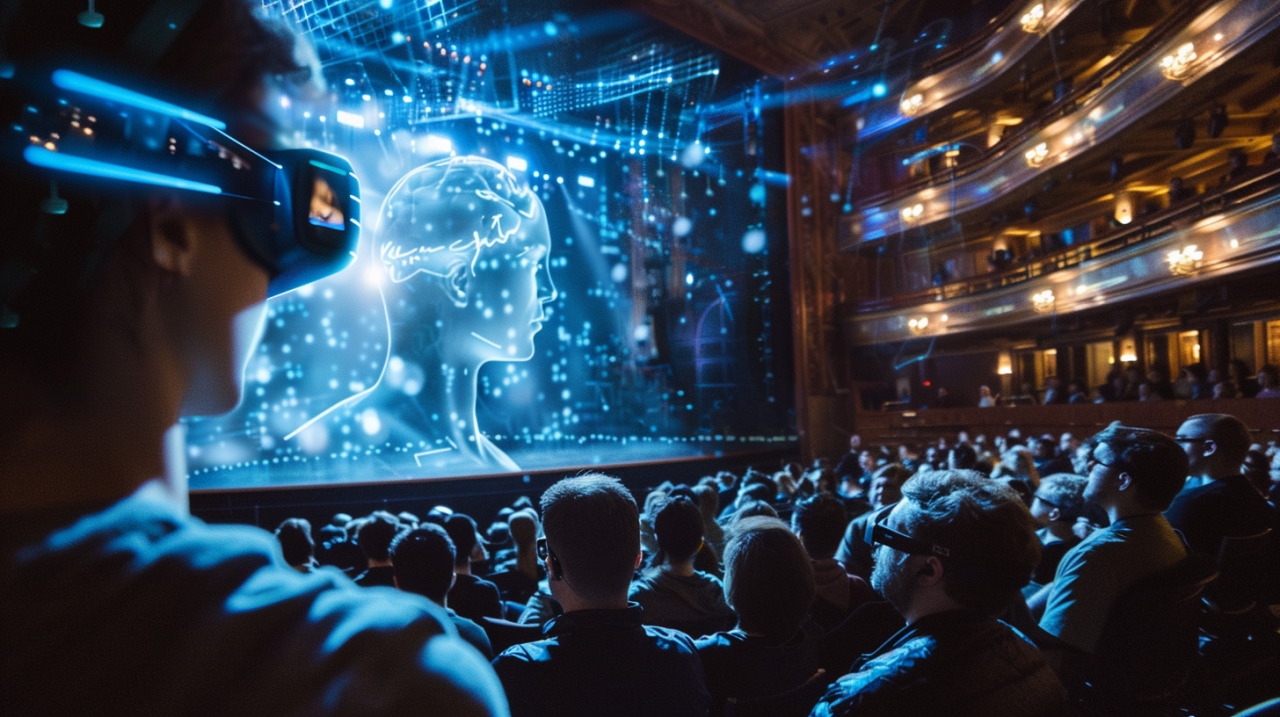

Theater has always been the art form that demands everything. A school production or community theater show requires sets, costumes, lighting, choreography, direction, and performance — and all of it has to come together on a fixed opening night. In the middle of that list sits music, and for most drama teachers and independent theater directors, music is the element that gets solved last and least satisfyingly.
The options are familiar and limited. License an existing musical’s score, which comes with fees and performance rights that escalate with audience size. Use royalty-free background music that doesn’t quite fit the specific emotional beats of the production. Ask the one person on the team who plays piano to write something original, which works until they run out of time two weeks before opening. Or simply do without and hope the performances carry the show.
AI music generation doesn’t solve every theatrical music problem — it doesn’t replace a live pit orchestra or a skilled music director on a professional production. But for drama teachers staging original works, community theater companies producing new scripts, and independent directors who need composed music without a composer’s budget, the tools available now are meaningfully better than any of the above options.
Music Composed Around the Story, Not Borrowed From Elsewhere
The specific problem with using existing music — even royalty-free music — for original theater is that every piece of existing music was written for a different story. It carries its own emotional logic, its own structural arc, its own dramatic intentions. Fitting existing music to a new script means constantly negotiating between what the music wants to do and what the scene needs.
An ai song generator free generates music from a description of what the scene needs rather than from a catalog of what exists. A scene of quiet grief doesn’t need to be matched to an existing sad track — it can be described: “slow, mournful, sparse piano, no resolution, the feeling of something irreversible.” A chase scene can be described: “urgent, rhythmic, building continuously, no melodic hook, pure forward momentum.” The music is built around the theatrical need rather than the theatrical need being bent around available music.
For productions with multiple distinct emotional registers — the comedy that turns serious, the drama that needs a moment of joy, the thriller with a tender scene — generating scene-specific music for each emotional beat produces a score that feels cohesive with the script in a way that library music never quite achieves.
Original Songs for Original Scripts
The most valuable application for drama teachers and directors working with original material is generating completely original songs for their productions. A new musical needs original songs. A play with songs needs music for those songs. A devised piece that incorporates music needs tracks that don’t exist anywhere else.
Text to music generates fully produced musical tracks from a description of the style, mood, and instrumentation needed. A show set in a 1920s speakeasy needs period-appropriate jazz with a specific character. A contemporary youth theater piece needs something that speaks to a teenage audience without condescending to it. A fantasy production needs a score that sounds like it belongs to a world that doesn’t exist. Each of these can be described and generated without a composer, without a music library subscription, and without the legal complexity of licensing existing music for live theatrical performance.
For drama teachers in schools, where the budget for a production is often measured in hundreds rather than thousands, being able to generate an original score changes what’s possible. Original musicals become stageable. Devised pieces can have original music. End-of-year showcases can have soundscapes that feel purposeful rather than assembled from whatever was available for free.
Writing the Lyrics, Generating the Song
Many original theater productions reach a specific point where a moment in the script calls for a song — the character breaks into music, the scene transitions through a number, the climax needs something that words alone can’t carry. The director and writer know what the song needs to say; they just need the music to say it in.
Lyrics to song closes that gap directly. Write the lyrics for the theatrical moment — the words the character would sing, in the voice the character would use — and generate a fully produced, vocally performed version of the song. The theatrical logic stays intact: the song says what the script needs it to say, in the style the production calls for, without requiring anyone on the creative team to also be a composer.
For student productions where the students themselves are part of the creative process, the ability to write lyrics and hear them become a real song within the same session is a powerful learning experience. Students who write a song for a character they’ve developed understand that character differently after hearing those words set to music. The collaboration between writing and music generation creates a richer engagement with the source material than either alone.
Rehearsal Recordings and Production Documentation
Beyond the live performance, original AI-generated music serves practical purposes throughout the production process. Rehearsal tracks give performers something consistent to practice to from the first read-through rather than waiting until a musician is available to play live. Cast recordings made with original AI music are legally clean in a way that recordings using licensed tracks are not, which means productions can share video of their work publicly without copyright complications.
For drama departments building a body of work over years — recording productions, creating promotional videos, maintaining an archive of student performances — original music produced for each show creates an audio legacy that belongs to the school or company rather than being subject to ongoing licensing restrictions.