

In the complex architecture of modern industrial civilization, the systems that transport fluids, gases, and chemicals are the lifeblood of global production. Whether it is a high-tech semiconductor fabrication plant in Asia, a nuclear power facility in North America, or a massive food processing hub in Europe, the reliability of these systems is paramount.
While colossal turbines and sophisticated control software often capture the headlines, the true unsung heroes of industrial safety and efficiency are the static components—the pipes, valves, and fittings.
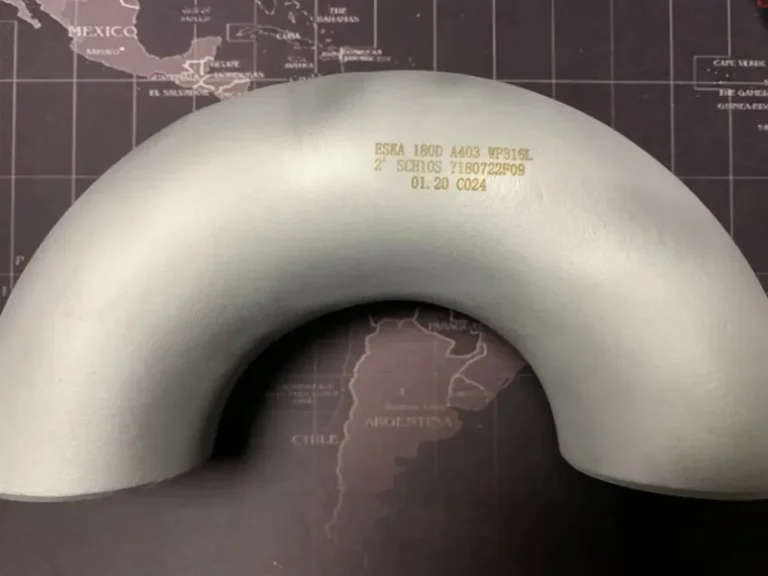
Among these, the choice of the best stainless steel elbow stands as a testament to an organization’s commitment to quality, safety, and long-term economic viability.
The Evolution of Metallurgical Excellence
The journey of industrial piping has transitioned from the fragile cast iron pipes of the 19th century to the advanced super-alloys of the 21st century. The introduction of stainless steel was a revolutionary milestone, offering a unique combination of strength and corrosion resistance. This resistance is derived from the “passive layer”—a microscopic film of chromium oxide that heals itself in the presence of oxygen. However, maintaining this layer through the rigorous manufacturing process of a 90-degree or 45-degree elbow requires immense technical expertise.
To achieve this level of consistency, leading global manufacturers like Hnyasco have invested decades into refining their forging and cold-forming techniques. For a piping system to last thirty to fifty years without catastrophic failure, the metallurgy must be flawless from the moment the raw billet is cast to the final inspection of the finished elbow.
Understanding the Physics of the “Weakest Link”
In any pressurized fluid system, the elbow is the point of maximum vulnerability. This is due to several physical phenomena:
- Centrifugal Force: As fluid moves at high velocity and hits a curve, it exerts immense pressure on the outer wall of the elbow. This can lead to mechanical erosion over time.
- Turbulence and Cavitation: Sharp changes in direction create eddy currents and localized pressure drops. If not managed by a perfectly smooth internal radius, these forces can strip away the protective oxide layer, leading to rapid “erosion-corrosion.”
- Stress Concentration: The geometry of an elbow naturally concentrates thermal and mechanical stresses. If the wall thickness is inconsistent or if the material has microscopic inclusions, these stresses will eventually manifest as hairline fractures.
Therefore, sourcing the best stainless steel elbow is not about finding the cheapest part; it is about ensuring the component can withstand these relentless physical forces for decades.
Sector-Specific Applications and Challenges
The versatility of high-grade stainless steel allows it to serve vastly different sectors, each with its own “nightmare scenarios”:
- The Pharmaceutical and Biotech Industry: In this realm, the primary enemy is not just corrosion, but contamination. Fittings must feature ultra-smooth internal surfaces (measured by RA values) to prevent the formation of “biofilms.” Even a microscopic pit in an elbow can harbor bacteria, ruining an entire batch of life-saving medication.
- Desalination and Marine Engineering: Dealing with high-salinity seawater requires materials that can resist “pitting” and “crevice corrosion.” In these environments, standard 304-grade steel is often insufficient, pushing engineers toward 316L or even duplex alloys.
- The Chemical and Petrochemical Sector: These facilities often transport highly volatile and acidic compounds at elevated temperatures. A single failed elbow in a refinery can lead to devastating fires and environmental disasters. Here, the best stainless steel elbow must come with full traceability and certification to guarantee its chemical composition.
The Hidden Economics of Industrial Procurement
A common pitfall in industrial procurement is focusing on the “Initial Purchase Price” rather than the “Total Cost of Ownership” (TCO). A budget-grade elbow might save a few dollars today, but the costs of failure are astronomical. Consider the following:
- Downtime Costs: In a major manufacturing plant, a single hour of unplanned downtime can cost tens of thousands of dollars.
- Labor and Access: Replacing an elbow often requires specialized welding teams, scaffolding, and system purging, which far outweighs the cost of the part itself.
- Safety and Liability: In the modern regulatory landscape, a leak that leads to worker injury or environmental pollution can result in millions of dollars in fines and irreparable brand damage.
By investing in premium components, facility managers effectively buy “insurance” against these risks. The durability of high-quality stainless steel also aligns with global ESG (Environmental, Social, and Governance) goals, as it reduces material waste and the energy consumption associated with frequent repairs.
Innovation in Manufacturing: The Digital Frontier
The production of the best stainless steel elbow has moved far beyond traditional blacksmithing. Modern factories utilize automated induction heating, precision CNC machining, and non-destructive testing (NDT). Techniques such as ultrasonic thickness gauging and X-ray diffraction are used to ensure that the atomic structure of the steel hasn’t been compromised during the bending process.
Furthermore, Industry 4.0 is introducing smart tracking. Every fitting can now be etched with a unique QR code or GCLID-compatible identifier, allowing engineers to scan a part and instantly see its chemical mill test report (MTR), its origin, and its expected service life. This level of transparency is what separates top-tier suppliers from the rest of the market.
Engineering a Sustainable Future
As the world shifts toward a more sustainable and technologically advanced future, the demand for high-performance infrastructure will only grow. From the transport of green hydrogen to the development of carbon capture and storage (CCS) systems, the integrity of the “elbow” remains a fundamental building block of engineering progress.
Selecting a partner who understands the nuance of fluid dynamics and metallurgical science is the first step in building a system that lasts. In an era where precision is the standard, settling for anything less than the best is a risk no modern enterprise can afford to take.