
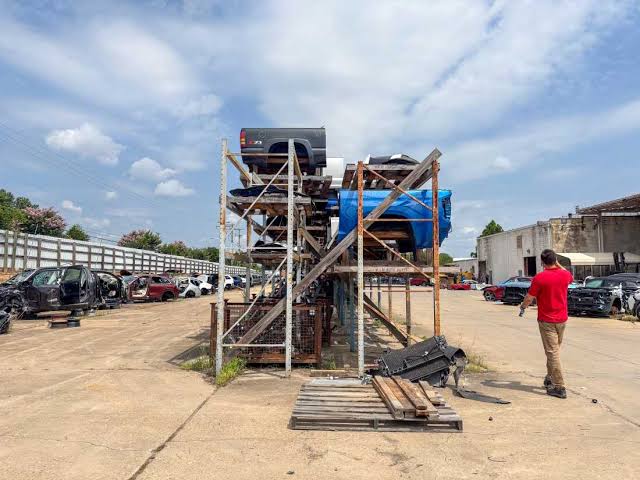

What does a volunteer food pantry do with a truck it cannot safely load? The crew in Southwest Baltimore that inherited a twenty-year-old box truck last winter spent two evenings scrolling box truck sales baltimore md listings before anyone thought to crawl underneath the one already sitting in their own lot. Then someone did, with a flashlight and a long screwdriver, and the whole conversation got cheaper. A donated truck with a straight frame is almost always worth restoring, and restoring it costs a fraction of buying a replacement. That is the argument, and everything below is how you tell which trucks qualify.
A Donated Vehicle Arrives With Hidden Rot
Donated vehicles come with a story attached, and the story is almost never complete. This one had hauled produce for a regional distributor, sat behind a warehouse for three years after that, and arrived with a fresh battery, honest tires and a title signed over in the parking lot. The problems were the ones nobody photographs for the donation letter. Plywood decking gone spongy across the back four feet, soft enough that a pallet jack wheel pressed a dent into it. Vinyl graphics peeling off the passenger side in long curling strips. A roll-up door that stopped an inch short of the sill and let a stripe of daylight run along the bottom edge. Job after job, the same thing turns up first on box bodies this age: rot starts at the seam where the floor deck meets the rear sill, because that is where water pools after every wash and every storm and then sits there. Rust does not take a season off.
That soft floor is not a cosmetic complaint. A cargo deck that has rotted through will not carry pallet loads safely, and a cargo door that does not latch can roll open in traffic, so neither one should be worked around with a tarp and good intentions. Nothing heavy goes on that truck until a shop has looked at it. Inspection requirements vary by state and by how the vehicle is registered and used, so ask the shop what your particular setup needs before the truck goes back on the road, and get the answer in writing with the estimate.
Repair Or Replace Comes Down To Structure
Think about a pair of work boots for a second. You resole them twice, maybe three times, each round costing a quarter of what new boots cost and buying another two years of wear. Then the upper splits at the flex point and no amount of sole work saves them, because the part that failed is the part that holds the shape. Trucks sort themselves the same way. Frame rails, crossmembers, roof bows and the rear sill are the upper. Decking, side panels, roof skin, graphics and paint are the sole. Straight rails and solid crossmembers mean repair wins, usually by a lot. A bent frame or crossmembers rusted through means you are resoling a dead boot, and the honest shops say so during the estimate instead of after the deposit.
Then run the numbers, because the numbers are where a small nonprofit actually makes this call. Say the pantry’s entire vehicle line item is $9,000 a year, and that figure covers fuel, insurance, tires and repairs across two vehicles. Anyone pricing box truck sales baltimore md against a budget like that runs out of room immediately, since a clean used sixteen-footer sits well above a full year of it. The body shop estimate on the donated truck came in near $4,200: new plywood decking and replacement cross sills, one side panel off and a new one fitted, corrosion treatment along the rear seams, a door track and seal, then paint on the repaired panel. Half a year of budget against several years of it. Structure decided that, not sentiment about the donor.
Week One Through Month Three In The Shop
The first week is mostly looking. Estimate, interior teardown, decking pulled up so somebody can put hands and a hammer on the frame rails, and a documented list separating what is structural from what is skin. By week three the loud work should be visible: rotted cross sills cut out and replaced, fresh decking down and fastened, the damaged panel gone and a new one fitted, corrosion treated where the seams had been holding water. Refinishing follows in a controlled booth, because a repaired panel that is not properly sealed and painted starts rusting again inside two winters, and then you have paid twice. By month three the truck sits in the pantry lot with a door that seals, a floor that takes a loaded pallet jack, and no graphics on it at all, which the volunteers preferred anyway (the old logo still had a fax number on it).
None of that runs on a fixed calendar, and any shop promising an exact date on a twenty-year-old body is guessing. Weather, booth scheduling and whatever the teardown uncovers all move the finish line. What a nonprofit can do is ask for the structural findings early, in week one, so the repair-or-replace decision never gets made halfway through the job with money already spent.
A Gift Becomes An Asset Once Sound
The truck’s age turned out to help the schedule rather than hurt it. Crash Lab, in an April 2026 rundown of what actually drives repair turnaround, names parts availability as the most significant factor of all, with OEM components for newer vehicles taking weeks to arrive and the delay compounding the cost of extended downtime. An old box body does not wait on a back order. Cross sills get cut from stock steel, decking is plywood, a side panel is sheet metal and rivets, and a shop with a welding table and a fabrication bench takes the supply chain out of the equation for most of the work. The newer the vehicle, generally, the more of its repair is somebody else’s shipping schedule.
So the pantry runs pallet deliveries twice a week now, on a truck it was given, for well under the cost of a replacement it could never have financed. The gift was real, but a gift that cannot be loaded is a parking problem, not an asset. What converted one into the other was an hour with a flashlight, an honest structural assessment, and a repair scope written down before anyone signed anything. Any organization sitting on a donated vehicle it has quietly given up on should start there, under the back end, with the decking screws out.