
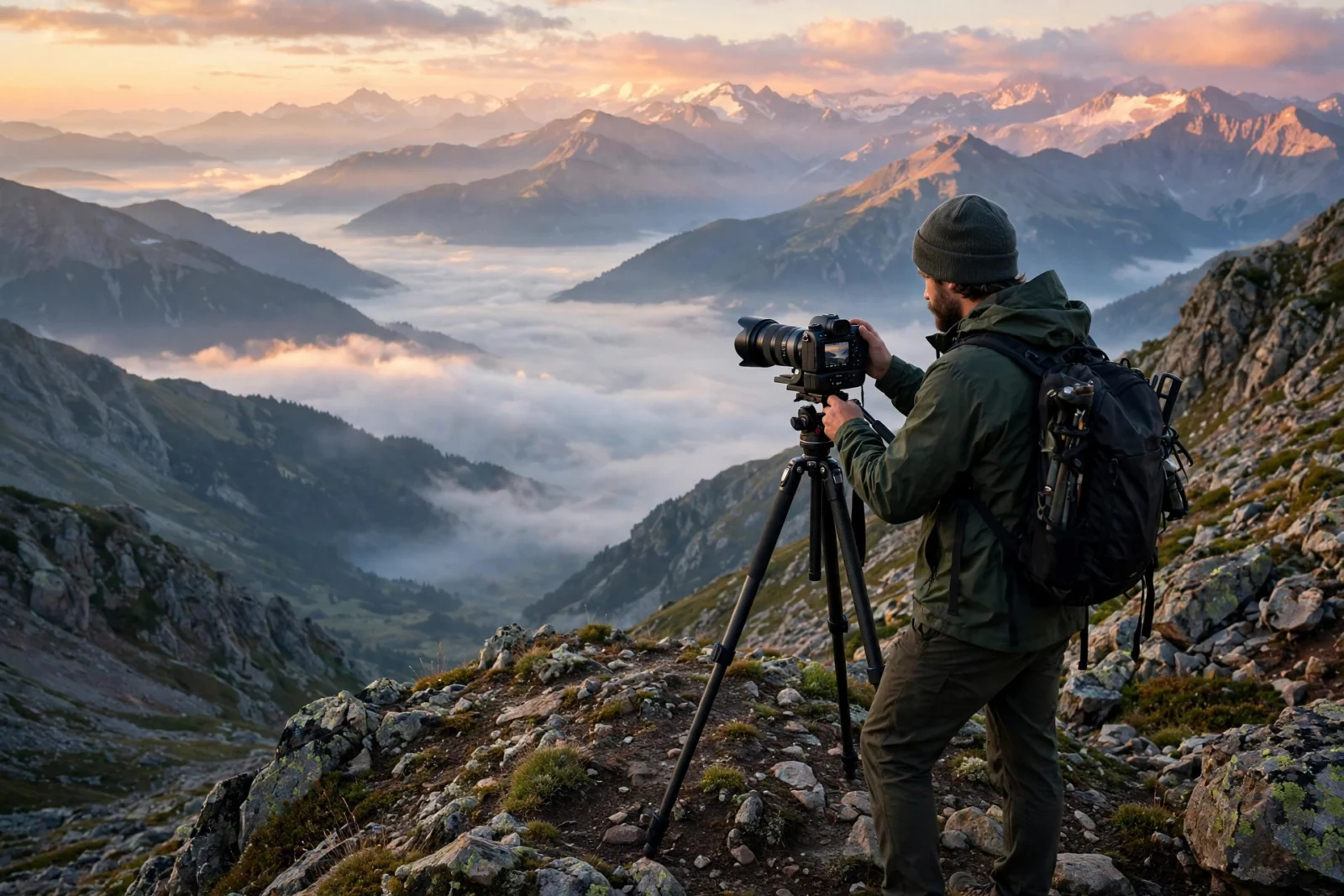

Landscape photography presents a unique challenge that separates casual photographers from those who dedicate themselves to mastering their craft. How do you take something as expansive as a mountain range, a sweeping valley, or an endless ocean horizon and translate it into a two-dimensional image that captures the same sense of awe you felt standing there? The answer lies in understanding the technical and artistic principles that transform a simple photograph into a compelling visual narrative. This requires more than just pointing a camera at a beautiful scene; it demands deliberate choices about composition, light, equipment, and perspective.
Understanding Composition and Framing
Composition serves as the foundation for any successful landscape photograph. The way you arrange elements within your frame determines whether a viewer's eye moves purposefully through the image or wanders aimlessly. The rule of thirds, one of the most useful compositional guidelines, suggests dividing your frame into a three-by-three grid and placing key elements along these lines or at their intersections. Positioning the horizon along the upper or lower third line, rather than centering it, creates more visual tension and interest than a centered approach would.
Beyond the rule of thirds, leading lines play a crucial role in guiding viewers through your landscape. A winding river, a fence, a row of trees, or even shadows can direct attention toward your main subject and create depth. When you use leading lines effectively, the landscape becomes less of a flat representation and more of a journey for the viewer's eye. Composition also involves deciding what to exclude from your shot, which can be just as important as what you include. A cluttered foreground or distracting background elements can undermine an otherwise compelling scene.
Mastering Light and Timing
Light is the photographer's most powerful tool, and landscape photographers understand this perhaps better than anyone else. The quality of light changes dramatically throughout the day, with sunrise and sunset often providing the most dramatic and flattering illumination. During these golden hour periods, warm tones bathe the landscape, shadows grow longer and more defined, and contrast increases naturally. Photographers who plan their shoots around optimal lighting conditions consistently find their images stand out compared to those taken in harsh midday sun.
Understanding how light interacts with different landscape features helps you anticipate and capture compelling scenes. Front lighting, where light comes from behind the camera, illuminates your subject directly but can produce a flatter image. Side lighting creates dramatic shadows and reveals texture in landscapes like canyons or rocky terrain. Backlighting, where the light source sits behind your subject, can create silhouettes or rim lighting that separates the landscape from the background. Each approach produces distinctly different moods and visual impacts on your final image.
Selecting the Right Equipment and Settings
While landscape photography does not necessarily require expensive gear, understanding how to use your equipment effectively is essential. Wide-angle lenses, typically ranging from 14mm to 35mm, are the landscape photographer's workhorses because they capture expansive vistas and exaggerate perspective, making foregrounds appear larger and creating a sense of immense space. Telephoto lenses, by contrast, compress the landscape by flattening perspective, which can emphasize layers and patterns in a scene. Many experienced landscape photographers carry multiple lenses to adapt to different compositional needs they encounter in the field.
Camera settings must be calibrated to achieve sharp, well-exposed images across the entire frame. Aperture, measured in f-stops, controls depth of field; smaller f-numbers like f/2.8 create shallow depth of field, while larger f-numbers like f/16 or f/22 keep both foreground and distant elements in sharp focus. For landscape work, stopping down to f/8 or higher ensures most of a scene remains acceptably sharp. Shutter speed and ISO also require careful attention; using a tripod and slower shutter speeds with lower ISO values produces cleaner, more detailed images than hand-holding or pushing ISO to compensate for inadequate light.
Working with Challenging Environmental Conditions
Landscape photographers often find themselves working in demanding environments where weather, terrain, and lighting create obstacles to overcome. Rain, fog, snow, and storms can enhance landscape photography by adding drama, atmosphere, and mood that clear skies sometimes cannot provide. Rather than viewing poor weather as a reason to stay home, many professionals intentionally seek out challenging conditions because the resulting images possess greater visual impact and emotional resonance. Preparing with appropriate protective gear for both yourself and your camera allows you to venture beyond the typical sunny-day shooting window.
Dynamic range, the difference between the brightest and darkest parts of a scene, often exceeds what a camera sensor can capture in a single exposure. During sunrise or sunset, the sky can be dramatically brighter than the foreground, forcing a choice about which part of the image to expose properly. Techniques like exposure blending, where you capture multiple exposures at different settings and combine them in post-processing, or graduated neutral density filters, which darken only the sky portion of your frame, help overcome this limitation. Understanding these tools expands your creative possibilities when facing landscapes with extreme tonal ranges.
Developing Your Unique Visual Voice
Technical proficiency matters, but landscape photography ultimately flourishes when photographers develop a distinctive perspective and style. Some photographers become known for seeking intimate details within vast landscapes, using close framing and unusual angles to reveal patterns and relationships others might overlook. Others focus on iconic locations, returning repeatedly to find new interpretations through changing seasons, weather patterns, and times of day. For those who want to study what a fully realized personal vision looks like in practice, Peter Lik photography demonstrates how a commitment to iconic locations and distinctive light conditions enables a photographer to build a singular, recognizable body of work. Your personal vision, the subjects that fascinate you, and the stories you want to tell through your images shape your work far more than any standardized technique can.
Studying the work of photographers whose vision resonates with you provides valuable inspiration and learning opportunities. Rather than copying their approach directly, understanding why certain images move you, what compositional choices they made, and how they used light informs your own artistic development. Regularly reviewing your own body of work helps identify recurring themes, strengths, and areas for improvement. This deliberate self-reflection, combined with continued practice and experimentation, accelerates your growth as a landscape photographer.
Conclusion
Capturing vast landscapes in a single frame requires the convergence of technical knowledge, artistic sensibility, and persistent practice. From mastering composition and understanding light to selecting appropriate equipment and working through challenging conditions, each element contributes to creating images that convey the grandeur and emotion of natural places. The craft goes beyond following rules; it involves internalizing these principles, then thoughtfully departing from them when doing so serves your creative vision. As you invest time in landscape photography, you will find that the most rewarding images often come from pushing beyond your comfort zone, exploring new locations, and continually refining your unique perspective on the natural world.