
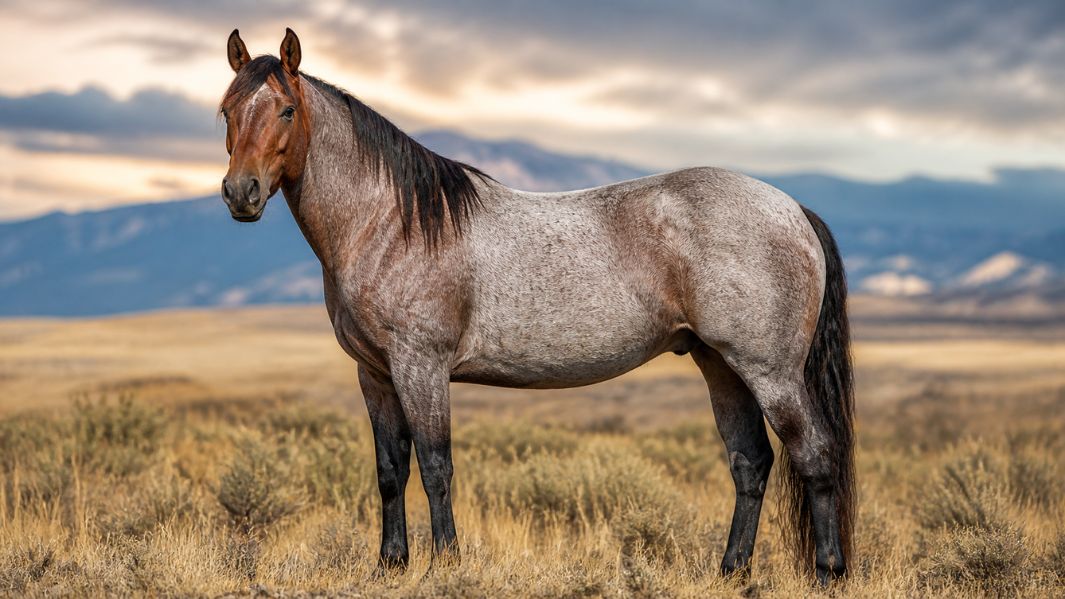

A roan horse stands out in the equine world, not for unusual markings or flashy patterns, but for its beautifully blended coat. The term “roan” describes a coat color pattern where white hairs are evenly intermingled with colored hairs across much of the horse’s body. This produces a soft, frosted, or silvery look that shifts with the horse’s base color. Uniquely, the head, lower legs, mane, and tail usually remain darker and more solid, creating a bold contrast against the body. Unlike gray horses, which lighten over time, roans typically maintain consistent coat intensity. This makes roan among the most recognizable and admired coat patterns by horse owners, breeders, riders, and equine enthusiasts.
What Is a Roan Horse?
A roan horse is not a breed, but a coat color pattern found in several horse breeds. Many people wrongly believe “roan” refers to a specific type of horse, but it actually describes the distribution of hair color. A true roan has an even blend of white and colored hairs on the body, while the head, mane, tail, and lower legs usually retain the horse’s base color. This pattern creates a distinctive appearance that can look blue-gray, red-tinted, strawberry, or dark and smoky, depending on the base coat color. Roan horses are valued for their balanced, natural beauty because their coats rarely fade sharply with age. The roan pattern can be subtle or striking, but in every case, it gives the horse a unique identity that stands out in pastures, shows, and arenas.
How the Roan Coat Pattern Appears
The roan coat pattern results from white hairs interspersed with the horse’s colored body coat. These white hairs are distributed evenly across the neck, shoulders, chest, hips, and upper legs. In contrast, the horse’s head and lower legs typically remain darker, distinguishing roan horses from other coat patterns. For example, a blue roan may show a black head and legs and a body that appears bluish or smoky as white hairs blend with black hairs. A red roan may feature a chestnut base, with white hairs throughout the body, creating a warm reddish or coppery tone. This uniform blending signals a true roan coat. The effect can intensify under specific lighting or during seasonal coat changes, but the basic pattern usually remains stable throughout the horse’s life.
Roan Horse vs Gray Horse
One of the most common points of confusion is distinguishing between a roan horse and a gray horse. At first glance, some grays and roans can appear similar because both have lighter hairs interspersed with darker ones. The key difference is how the coat changes over time. Gray horses are born dark and gradually lighten with age, often becoming nearly white. Roan horses retain their distinctive pattern throughout life. Their coat may appear lighter in summer or darker in winter due to seasonal growth, but it does not progressively turn white. Roans usually feature darker heads and legs, while grays lighten uniformly, including the face. Recognizing these differences supports accurate identification, registration, breeding records, and general horse knowledge.
Common Types of Roan Horses
There are several common types of roan horses, each named for their base coat color. The most familiar types are blue roan, red roan, and bay roan. Blue roan horses have a black base coat with white hairs, giving a bluish or steel-gray look. This striking color often conveys a dramatic, powerful presence. Red roan horses usually have a chestnut base coat blended with white hairs, resulting in a soft red, rose, or strawberry hue. Bay roan horses have a bay base coat: typically, a reddish-brown body with black points, as white hairs lighten the body for a balanced roan effect. Roan shades can vary, but all have this defining trait: white hairs evenly interspersed with the colored coat.
Blue Roan Horse
A blue roan horse is one of the most admired roan colors for its cool, smoky look. The horse has a black base coat, with white hairs blended into the body, giving a blue-gray or slate tone. The head, mane, tail, and lower legs usually stay black or very dark, creating a striking contrast with the lighter body. Blue roans often appear especially dramatic in sunlight, where the mix of black and white hairs creates a metallic or silvery sheen. This color occurs in various breeds, including Quarter Horses, Mustangs, Welsh Ponies, and some draft breeds. Because of their bold appearance, blue roans are popular among riders seeking a horse that looks powerful, rare, and memorable.
Red Roan Horse
A red roan horse has a chestnut base coat interwoven with white hairs. The blend generates a warm red tone, sometimes appearing pinkish, coppery, or strawberry-hued. Mane and tail may remain chestnut or flaxen, depending on genetics, while head and lower legs usually display the solid chestnut color. Red roans often catch the eye with their luminous coats in natural light. The mixture of red and white hairs produces a soft, classic look cherished by horse lovers. Red roan is especially common in certain stock breeds and valued for its Western horse aesthetic.
Bay Roan Horse
A bay roan horse has a bay base coat, typically a brown or reddish-brown body with black points on the mane, tail, and lower legs. When the roan pattern appears on a bay horse, white hairs intermingle with the body while the black points usually stay dark. This results in a striking contrast that makes the horse appear both elegant and rugged. Bay roans can be mistaken for red roans, but the black mane, tail, and lower legs distinguish them. A bay roan’s body may look lighter, softer, or dusty compared to a regular bay. This coat pattern is admired for blending the classic beauty of bay coloring with the distinctive frosted effect of roaning.
Roan Horse Genetics
The roan coat pattern is connected to genetics, and a horse must inherit the roan gene from at least one parent to show the true roan pattern. The roan trait is commonly described as dominant, meaning that if a horse inherits the roan gene, the pattern can appear on its coat. However, coat genetics can be complex, and accurate identification sometimes requires genetic testing, especially when a horse has a color that resembles roan but may actually be another pattern. Some horses may show rabicano, varnish roan, or other white hair patterns that look similar to true roan but are genetically different. This is why breeders and registries often pay close attention to parentage, markings, and coat behavior over time. Knowing the genetics behind a roan horse can help breeders make informed decisions, and help owners understand why their horse looks the way it does.
Breeds Where Roan Horses Are Found
The roan pattern is found in many breeds, though some show it more frequently. Roans regularly appear in American Quarter Horses, Paint Horses, Mustangs, Belgian Drafts, Welsh Ponies, and various European breeds. In Western riding, roans combine striking color with a rugged working horse image. Draft breeds display roan coats—usually blue, bay, or red roan—while ponies look charming and distinct thanks to the pattern. As a coat pattern, roan does not affect the horse’s abilities, temperament, or build, which depend on breed and individual characteristics.
How to Identify a True Roan Horse
Identifying a true roan horse requires careful examination of the coat pattern. A true roan usually has white hairs evenly mixed through the body, while the head, mane, tail, and lower legs remain darker. The pattern should not look patchy, spotted, or uneven. The horse should also maintain a similar coat appearance over time, rather than becoming progressively lighter every year like a gray horse. Seasonal changes are normal, so a roan may look brighter or darker depending on whether it has a summer coat or a winter coat. Another clue is the presence of darker areas where the horse has had injuries or scars. Some roans grow back solid-colored hair over injured areas, creating what are sometimes called “corn marks.” These marks can be another hint that the horse is a true roan.
Roan Horse Personality and Performance
A roan horse’s color does not dictate personality. Coat color does not determine if a horse is calm, energetic, gentle, stubborn, athletic, or trainable. Behavior relies on breed, bloodline, training, environment, and individual character. For example, roan Quarter Horses excel in ranch work or Western events, while roan drafts are steady and suited for heavy tasks. Roan ponies may appeal to children given good training. Though coat draws attention, judge horses by health, temperament, and suitability, not appearance.
Caring for a Roan Horse
Caring for a roan horse is generally the same as caring for any other horse. The coat color does not require special treatment, but regular grooming can help keep the roan pattern looking clean and bright. Dust, mud, sweat, and loose hair can make the coat look dull, so consistent brushing is useful. During shedding seasons, roans may change shade as their winter coat comes out and their summer coat appears. This is normal and does not mean the horse is changing color permanently. Owners should also pay attention to nutrition, hoof care, dental care, vaccinations, exercise, and shelter. A healthy horse usually has a better-looking coat, and proper care brings out the natural beauty of the roan coat pattern.
Why Roan Horses Are So Popular
Roan horses are popular because they look unique while still maintaining a natural, classic appearance. Their coats often seem to change slightly under different lighting, making them visually interesting. A blue roan may look almost black in shade and silver in sunlight, while a red roan may appear soft and rosy in the summer coat. Many riders appreciate roans because the pattern is attractive without being overly flashy. In Western riding, ranch work, trail riding, and show settings, roans often stand out in a memorable way. Their popularity is also helped by the fact that roan coats can appear across several useful and respected horse breeds. For many horse lovers, a roan horse represents a perfect mix of beauty, strength, and individuality.
Conclusion
A roan horse is admired for its beautiful blend of white and colored hairs, darker head and legs, and stable coat pattern that usually remains consistent throughout life. Whether blue roan, red roan, or bay roan, each type has its own special appeal and visual charm. The roan pattern is not a breed, but a genetic coat trait found in several breeds worldwide. While color can make a horse memorable, the true value of any horse comes from its health, temperament, training, and suitability for its purpose. Still, there is no doubt that the roan horse holds a special place in the equine world. With its frosted body, rich contrast, and timeless appearance, the roan remains one of the most distinctive and beloved coat patterns among horse enthusiasts.