
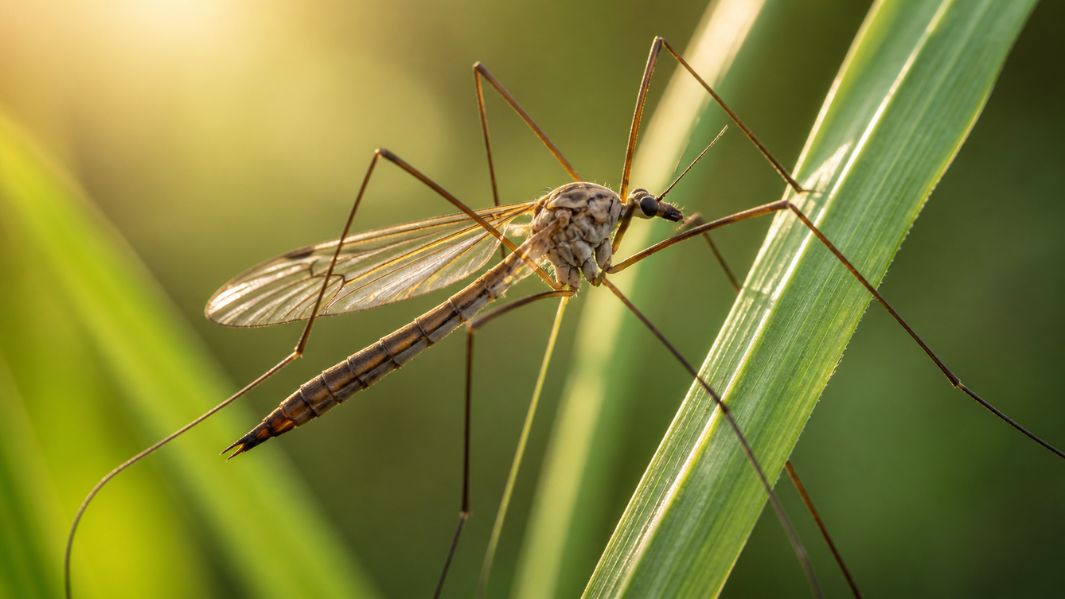

The mosquito eater is one of the most misunderstood insects people notice around homes, gardens, porches, lawns, and lights during warm seasons. Many people see its long legs, narrow body, and weak flying pattern and immediately assume it is a giant mosquito. Because of that appearance, this insect has earned several common names, including mosquito hawk, skeeter eater, and mosquito eater. The name sounds helpful, as if the insect hunts mosquitoes and protects humans from bites. However, the truth is different. The insect most commonly called a mosquito eater is actually a crane fly, and despite its oversized mosquito-like look, it does not bite humans, sting, or usually eat mosquitoes. In fact, adult crane flies are generally harmless, short-lived insects that spend most of their adult life flying awkwardly, mating, and laying eggs.
Understanding the mosquito eater is important, and you might be surprised by how harmless it really is. Too often, fear and confusion lead people to kill these insects unnecessarily. Sure, their strange appearance can make them seem dangerous, but they are not blood-feeding pests like mosquitoes. Instead, they are part of the natural environment and, in many cases, play a small role in the food chain and soil ecosystem. While some crane fly larvae can damage lawns in certain conditions, the adult mosquito eater itself poses no threat to people or pets. Ready to learn more? This article explains what a mosquito eater really is, why the name is misleading, how to identify it, where it lives, and what you should do if you find one in your home.
What Is a Mosquito Eater?
A mosquito eater is a common nickname for a crane fly, an insect belonging to the family Tipulidae and related groups. Crane flies are found worldwide and are especially noticeable in moist environments, grassy areas, gardens, and areas with decaying plant material. Their bodies are usually thin and fragile, with very long legs that often break off easily. Because they look like enlarged mosquitoes, people often believe they are dangerous or capable of biting. This belief is understandable at first glance, but it is not accurate.
Crane flies are true flies, meaning they belong to the order Diptera, the same large insect order that includes houseflies, fruit flies, midges, and mosquitoes. However, being related to mosquitoes does not mean they behave like mosquitoes. Mosquitoes are known for their blood-feeding females, which bite humans and animals to obtain nutrients for egg production. Crane flies do not follow that pattern. Adult crane flies generally have weak mouthparts and are not built for biting skin. Many adult crane flies feed very little, and some may sip nectar, water, or other light fluids. Others may not feed much at all during their short adult lifespan.
Why Is It Called a Mosquito Eater?
The name “mosquito eater” likely comes from the insect’s appearance and a common misunderstanding rather than its actual behavior. Since the crane fly looks like a large mosquito, people assumed it must either be a more dangerous mosquito or a predator of mosquitoes. The second idea became popular because it made the insect sound useful. Over time, names like mosquito hawk and skeeter eater spread through everyday conversation, even though they are scientifically misleading.
The truth is that crane flies do not normally hunt mosquitoes. They are not mosquito predators in the way dragonflies, some fish, bats, and certain aquatic insects may feed on mosquitoes. Adult crane flies are delicate insects, not aggressive hunters. They do not chase mosquitoes through the air, nor do they reduce mosquito populations in a meaningful way. So, while the name “mosquito eater” sounds beneficial, it creates a false expectation. The insect may be harmless, but it is not a natural mosquito-control machine.
Does a Mosquito Eater Bite?
One crucial fact about the mosquito eater is that it does not bite humans. Mosquitoes can pierce skin with specialized mouthparts, but crane flies lack the mouthparts needed to bite or feed on blood. Their slender bodies and elongated legs may seem intimidating, especially when flying indoors and bouncing against walls or ceilings, but they are not hostile insects.
Crane flies do not sting or carry venom and are not aggressive insects. If one lands on you or flies indoors, it is usually confused or attracted to light. Their delicate legs and wings make them look dramatic, but their behavior is harmless, offering reassurance to those who fear insects.
What Does a Mosquito Eater Look Like?
A mosquito eater usually has a slender body, narrow wings, and extremely long legs. Its legs are often much longer than its body, giving it a fragile, spider-like appearance when it rests on a wall or window screen. Body color varies by species, but many crane flies are grayish, brownish, tan, or dull yellow. Their wings may be clear, smoky, patterned, or lightly tinted. When they fly, they often move slowly and unevenly, which makes them easy to notice indoors.
The easiest way to identify a mosquito eater is to compare it with a real mosquito. Mosquitoes are usually smaller, more compact, and more controlled in flight. They often land quietly and may bite exposed skin. Crane flies are much larger, more awkward, and more fragile—and they don’t show the same biting behavior. Take a look at their legs: crane flies have very long, thin legs that may spread outward when resting. So, if you see a large insect resembling a giant mosquito that neither bites nor flies smoothly around lights, you’re likely seeing a crane fly.
Where Do Mosquito Eaters Live?
Mosquito eaters are often found in areas with moisture and vegetation. Gardens, lawns, damp soil, leaf litter, ponds, stream edges, and wooded areas can attract crane flies. Their larvae need suitable environments to develop, and many species prefer moist soil or decaying organic matter. This is why people may see more crane flies after rainy periods or in areas with watered lawns and garden beds.
Adult crane flies are commonly attracted to outdoor lights at night. They may enter homes through open doors, windows, garage gaps, or damaged screens. Once inside, they often fly toward lamps, ceiling lights, or windows. This behavior can make them seem more invasive than they really are. In most cases, a mosquito eater indoors is simply lost. It is not nesting in your bedroom or feeding on people. It usually wants to escape or find a mate, depending on its life stage.
The Life Cycle of a Mosquito Eater
The life cycle of a mosquito eater includes four main stages: egg, larva, pupa, and adult. Female crane flies lay eggs in damp soil, grass, moss, or organic material, depending on the species. After the eggs hatch, the larvae begin feeding. Crane fly larvae are sometimes called leatherjackets because they have tough, worm-like bodies. These larvae can live in soil, mud, rotting vegetation, or aquatic environments.
The larval stage is often the longest and most active feeding stage. Some larvae feed on decomposing plant matter, which helps break down organic material. Others may feed on roots, including grass roots. In lawns, large numbers of certain crane fly larvae can cause patches of weakened or damaged grass. After the larval stage, the insect enters the pupal stage and eventually emerges as an adult crane fly. The adult stage is usually short. Adult crane flies are mostly focused on reproduction rather than feeding heavily or causing damage.
Are Mosquito Eaters Good or Bad?
The answer depends on which stage of the insect you are talking about. Adult mosquitoes are generally harmless and should not be considered dangerous pests. They do not bite, sting, or spread disease. They are also part of the food chain, serving as food for birds, spiders, frogs, bats, and other insect-eating animals. In that sense, they contribute to the ecosystem.
The larvae can be more complicated. Many crane fly larvae are harmless decomposers that help recycle organic material in soil and wet environments. However, some species can become lawn pests if their numbers grow too high. In these cases, larvae may feed on grass roots, causing yellow or brown patches. This does not mean every mosquito eater is a problem. Most homeowners who see a few adult crane flies around lights or windows do not need to worry. Lawn damage usually requires a larger larval population and suitable feeding conditions.
Do Mosquito Eaters Help Control Mosquitoes?
Despite the popular nickname, mosquito eaters do not provide reliable mosquito control. If you’ve hoped that these insects will keep mosquitoes at bay, it’s time to rethink that notion. Adult crane flies are not active mosquito hunters; they aren’t equipped to chase or capture mosquitoes in the air. Their fragile bodies and weak flight make them poor predators.
If you want to reduce mosquitoes around your home, the best approach is to remove standing water, clean gutters, empty buckets, refresh birdbaths, and maintain outdoor areas where mosquitoes may breed. Mosquitoes lay eggs in stagnant water, so reducing those breeding spots is far more effective than relying on crane flies. Natural predators may help in some environments, but the mosquito eater is not one of the major mosquito-control insects. So, take action—you’ll notice a difference!
Why Mosquito Eaters Come Inside the House
A mosquito eater may come inside your house by accident. Open doors, torn screens, bright indoor lights, and gaps around windows can let them in. Because they are attracted to light, they may fly around lamps or ceiling fixtures and become trapped indoors. Their movement may seem chaotic, but they are not searching for people or food.
If you find one inside, the simplest solution is to gently guide it back outside. You can use a cup and paper, open a window, or turn off indoor lights and turn on an outdoor light to encourage it to leave. There is usually no need to spray insecticide for one or two crane flies. They are delicate insects and do not usually survive long indoors. Keeping screens repaired and reducing bright light near open doors can help prevent them from entering.
How to Manage Mosquito Eaters Around Your Home
For most homes, mosquito eater control is not necessary. Seeing a few adult crane flies is normal, especially during certain seasons. However, if you notice many crane flies or suspect lawn damage from larvae, it may help to check your grass more closely. Brown patches, thinning turf, and birds digging in the lawn can sometimes indicate the presence of soil larvae. Proper lawn care, good drainage, and avoiding overwatering can reduce conditions that favor crane fly larvae.
Healthy grass is more resistant to minor root feeding. Aerating compacted soil, improving drainage, and removing excessive thatch can help create a stronger lawn environment. If the problem is severe, homeowners may need to identify whether crane fly larvae are truly the cause before taking action. Many lawn problems look similar, including drought stress, fungal disease, poor soil, or other insects. Correct identification matters because unnecessary treatment can harm beneficial insects and waste money.
Common Myths About Mosquito Eaters
The mosquito eater has collected many myths because of its unusual appearance. The first myth is that it is a giant mosquito. It is not. It may look like one, but it is a different insect with different behavior. The second myth is that it bites harder than a mosquito. This is also false because crane flies do not bite humans. The third myth is that it eats large numbers of mosquitoes. Again, this is not true for the adult crane fly. The fourth myth is that mosquito eaters are dangerous to pets. Adult crane flies are not poisonous or aggressive toward cats, dogs, or other common pets.
These myths spread because people often judge insects by appearance. A large insect with long legs can seem threatening, especially when it enters a room unexpectedly. But in reality, the crane fly is more awkward than dangerous. It is a harmless visitor that is usually easy to remove without panic.
Conclusion
The mosquito eater may have a scary name and an even scarier look, but it is not the dangerous insect many people imagine. It is usually a crane fly, a harmless flying insect that looks like an oversized mosquito but does not bite, sting, suck blood, or spread disease. The nickname is misleading because adult crane flies do not normally eat mosquitoes and should not be relied on for mosquito control. Their larvae may sometimes affect lawns, but adult mosquitoes are mostly harmless and short-lived.
The best way to deal with mosquito eaters is to understand them rather than fear them. If one enters your home, gently let them outside. If you see them around your yard, remember that a few adult crane flies are usually no cause for concern. By learning the truth about the mosquito eater, you can avoid unnecessary fear, protect harmless insects, and focus on real mosquito prevention methods that actually work.