
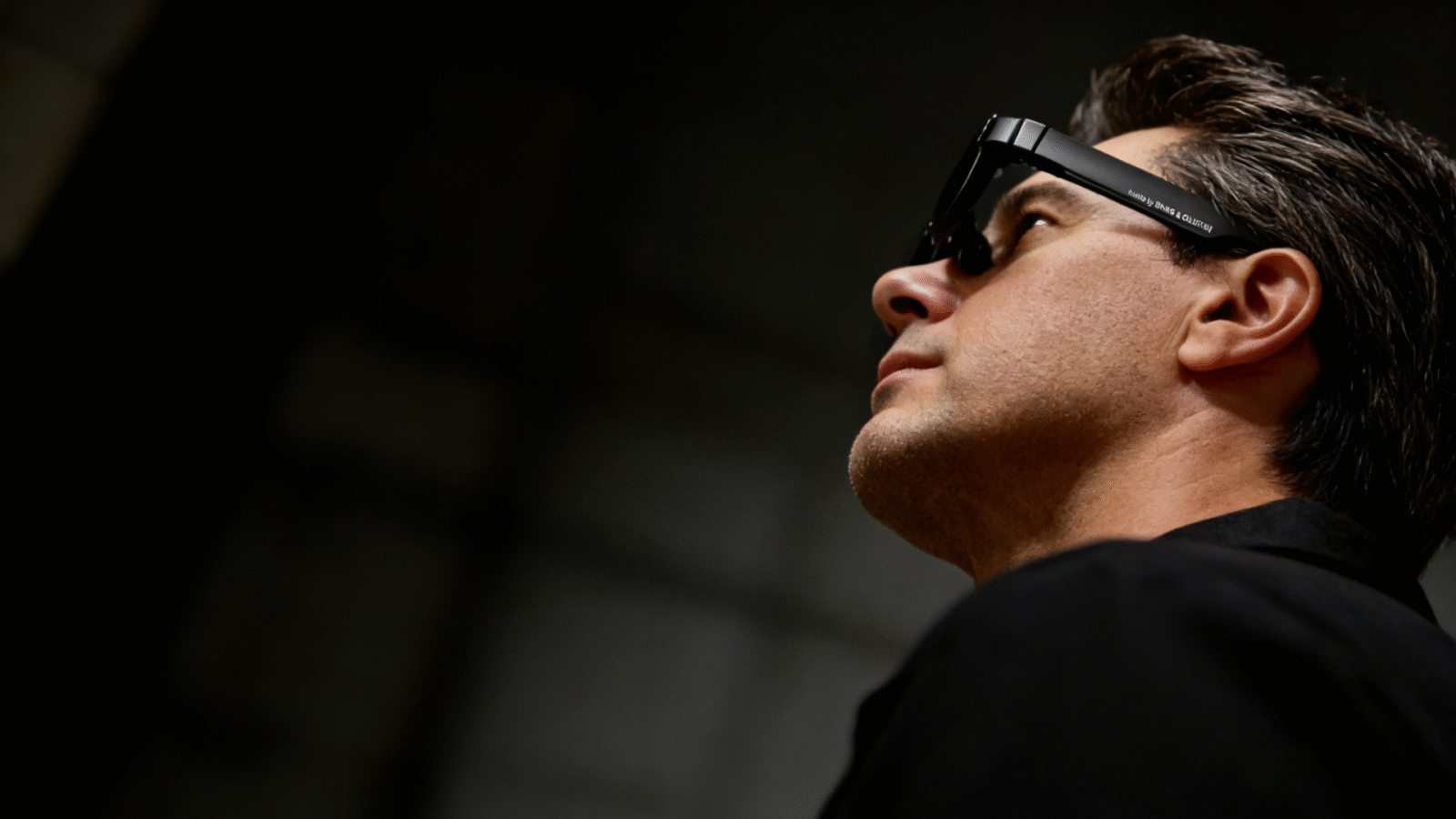

The best AR glasses 2026 delivers look nothing like what most people expected a year ago. Prices dropped below $300, display tech matured past the gimmick stage, and newcomers beat established brands on specs that actually matter.
AR smart glasses now cover serious ground, from portable cinema and console gaming to real-time AI translation and heads-up navigation. This guide breaks down five standout models sorted by category so you can find the right pair.
What Shifted in the AR Market This Year
Display AR glasses were niche gadgets two years ago. In 2026, micro-OLED panels reached mass production, USB-C DisplayPort output spread across phones, laptops, and handhelds, and AI chips shrank enough to fit inside a temple arm.
That convergence produced the best AR glasses 2026 buyers have seen yet. The field splits into two lanes: display-first AR glasses for entertainment, and AI-first AR smart glasses that overlay information onto the real world.
Buying in the wrong lane wastes your budget. These five picks are sorted by type so you can jump to the section that matches how you actually plan to use these devices in daily life.
Display AR Glasses: Three Models That Lead on Quality
These three display AR glasses compete on panel quality, audio fidelity, and price. One spec sets the leader apart from every rival: HDR10 certification, something no other consumer AR glasses on this list currently offer.
RayNeo Air 4 Pro — The HDR10 Pioneer
RayNeo’s Air 4 Pro is the first consumer AR glasses with HDR10. Its micro-OLED panels hit 1,200 nits brightness, 200,000:1 contrast, and 98% DCI-P3 — specs that make it the best AR glasses 2026 has produced for entertainment.
The Vision 4000 chip upscales SDR to HDR in real time. Audio runs through a quad-speaker array co-tuned by Bang & Olufsen. At $299 and 76 grams with TÜV SÜD eye protection, it undercuts comparable models by $150.
XREAL 1S — The Screen-Size Leader
The XREAL 1S projects the largest virtual screen here — 500 inches at a 52-degree field of view for $449. Its X1 chip converts 2D to 3D natively. Bose open-ear speakers add recognizable audio to these display AR glasses.
Brightness caps at 700 nits, well below the Air 4 Pro’s 1,200. No HDR10, no built-in diopter adjustment, and at 82 grams it is among the heavier display-class pairs in this best AR glasses 2026 roundup.
Viture Beast — Premium Optics, Premium Price
Viture’s flagship uses Sony micro-OLED panels at 1200p per eye with a 58-degree field of view — the widest among display AR glasses here. At 88 grams, its aluminum-magnesium frame and nine-level electrochromic tint deliver the most immersive viewing.
At $549, the Beast costs nearly double the Air 4 Pro. It lacks HDR10 and needs a $129 dock for Nintendo Switch, but its wider FOV and electrochromic dimming make it the top pick for pure cinematic immersion.
Beyond Display: AR Smart Glasses for AI and HUD Use
Not every buyer wants a virtual cinema on their face. Some need an AI assistant, real-time translation, or a navigation HUD that blends into everyday frames — a different path from the best AR glasses 2026 display models above.
This growing category of AR smart glasses trades screen immersion for all-day convenience and discretion. The two picks below take very different approaches — one is a passive HUD, the other a full standalone AR smart glasses computer.
Even Realities G1 — The Invisible HUD
The G1 weighs just 44 grams and easily passes for ordinary prescription eyewear, making other AR smart glasses feel noticeably bulky. Its small monochrome micro-LED shows text-only data: navigation arrows, translation subtitles, and teleprompter scripts.
At $599, it is the priciest and most limited pick in this guide. No color display, no speakers, no camera, and Pro translation requires a $4.99 monthly subscription. Suited for professionals needing discreet, glanceable data.
RayNeo X3 Pro — Standalone AR Computer
The X3 Pro runs Google Gemini AI on a Qualcomm Snapdragon AR1 Gen 1 chip. Its micro-LED waveguide display hits 6,000 nits peak brightness, readable in direct sunlight. A 12MP camera with SLAM tracking enables six-degree-of-freedom spatial awareness.
Real-time translation covers 14 languages with visual overlay. At $1,299 MSRP with a current early-bird of $1,099, the X3 Pro targets adopters wanting best AR glasses 2026 technology in standalone form. Weight matches the Air 4 Pro.
How These Five AR Glasses Compare in 2026
Display Specs at a Glance
| Spec | RayNeo Air 4 Pro | XREAL 1S | Viture Beast | Even G1 | X3 Pro |
|---|---|---|---|---|---|
| Price | $299 | $449 | $549 | $599 | $1,299 |
| Display | Micro-OLED | Micro-OLED | Sony Micro-OLED | Mono Micro-LED | Full-Color MicroLED |
| HDR10 | √ | × | × | N/A | N/A |
| Brightness | 1,200 nits | 700 nits | 1,250 nits | 1,000 nits | 6,000 nits |
| Refresh | 120Hz | 120Hz | 120Hz | 20Hz | 60Hz adaptive |
| Audio | B&O quad | Bose | Harman | None | Directional |
| Weight | 76g | 82g | 88g | 44g | 76g |
Key Trade-offs Across Categories
Display AR glasses like the Air 4 Pro, XREAL 1S, and Viture Beast require a wired USB-C source and lack cameras or standalone OS. The G1 and X3 Pro run independently but serve narrower use cases text-only HUD and spatial computing, respectively.
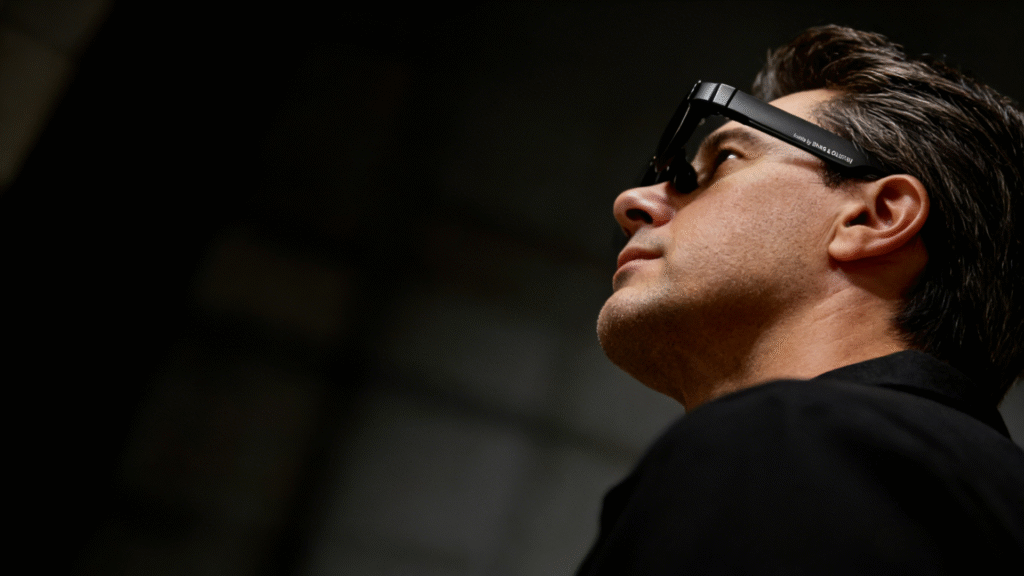
What Sets the Air 4 Pro Apart
For display-first AR smart glasses, three factors define value when comparing the best AR glasses 2026 offers — these criteria apply to wired display models like the Air 4 Pro, XREAL 1S, and Viture Beast:
- Display quality — HDR10 remains exclusive to the Air 4 Pro; without a display pipeline built for it, rivals are unlikely to match native HDR contrast through firmware alone
- Comfort — at 76 grams with TÜV SÜD-certified eye protection, the Air 4 Pro is among the lighter display-class AR smart glasses, though it requires a wired USB-C connection
- Value — the Air 4 Pro bundles HDR10, B&O-tuned quad-speaker audio, and broad USB-C DisplayPort compatibility at $299, while comparable display models start at $449
Which Category Fits Your Life
Choosing the right AR glasses means identifying your primary use case first and then comparing specs within that lane to find the best AR glasses 2026 has produced for your particular needs and daily routine:
Quick Decision Guide for AR Smart Glasses
- Entertainment and gaming — display AR glasses like the Air 4 Pro, XREAL 1S, and Viture Beast replace TVs and portable monitors with immersive virtual screens
- HUD and translation — AR smart glasses like the Even G1 overlay navigation and subtitle data onto the real world without a full display or speakers
- Standalone AR computing — the X3 Pro runs AI natively with spatial tracking and a sunlight-readable waveguide display for power users who want untethered AR
The Bottom Line
Five smart glasses, three distinct categories. If portable cinema or gaming under $300 is your priority, the RayNeo Air 4 Pro is the strongest value pick here — HDR10, B&O-tuned quad-speaker audio, and a 76-gram frame at $299.
XREAL 1S wins on virtual screen scale. Viture Beast leads on premium immersion. Even G1 and X3 Pro serve HUD and standalone AR needs that display glasses cannot address. Pick the category first, then let the specs decide.